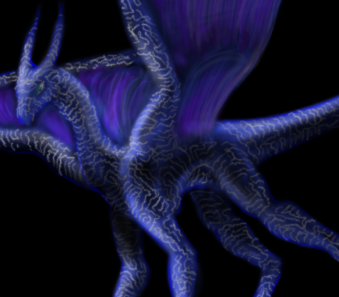
Element magic is the most common type among the Chosen; a little under one-quarter of the population is either solely or primarily of this type.
As previously mentioned, elementalists each control one “element”, and that only; the results (though not the technique) are similar to those of the art of bending from the Avatar franchise, in that an elementalist can move, shape, or otherwise manipulate his or her “element” in ways not generally allowed for by its normal physical properties or, for that matter, by the laws of physics.
The term “element”, however, is more or less a convenient but imprecise shorthand here; it doesn't correspond to the classical elements, nor to the chemical elements of the periodic table, but to various kinds of “natural classes” of substance, which vary from individual to individual in scope and often overlap. Two elementalists, for example, might find that they can both manipulate the sand on a beach, but one might do so because of the composition (and could manipulate other pieces with a similar composition but differing particle size), and the other because of the particle size (that is, they could manipulate sand - any sand - but not gravel or silt).
There are some rules guiding the way Element magic works:
- While it is not understood why a child would become an elementalist at all (except that they're born to it), in the Citadel it has been observed that young elementalists appear to “latch on” to their specialty around the age of one cycle. The substance in question must be something they are being exposed to, and have the opportunity to “play” with using their magic, during this period of their lives. Children are somewhat more likely to attune to substances that surrounding adults treat as important, resulting in certain occupational and cultural slants; the child of a smith might be more likely to be able to control a kind of metal, Ǣdyihòzhis elementalists might be more likely to control air or water, etc. (That said, there are always some oddities - someone just happens to be exposed to something rare during childhood and winds up only being able to control that thing and never sees it again in their life. If someone in the Citadel has all the other hallmarks of a Chosen and yet can't seem to do anything magical, something like this is assumed to be behind it.)
- Elementalists may only control matter: solids, liquids, or gases. (This does not necessarily exclude things like plasma or neutronium or Bose-Einstein condensates, but I'd like to think that the kinds of adults willing and able to expose their kids to things like that long enough to latch onto them, especially in a pre-modern society, are the kind of adults who wouldn't successfully pass on their genes anyway.)
- The type of substance being controlled must be a “natural class”: the kind of thing it is must be something that exists without sophont intervention. For example, there are no ceramics elementalists, though there are probably clay elementalists; an elementalist might be able to control a ceramic teapot, but if so it's because of what the components of the ceramic are, rather than the ceramic itself.
- A natural class will have a particular definition, which may be wide or narrow, but which does not necessarily relate to its chemical composition. As previously indicated, it may (if solid) also be a particulate size or mass: the ability to control sand, or gravel, or silt. Generally, the amount of mass of any sort that one is capable of manipulating at any given time is several times one's body weight.
- The less solid the matter, the less ability there is to distinguish between natural classes. In other words, there are lots of natural classes to be found and used among solids, but rather less among liquids, and “air elementalists”, in fact, can control just about any gas. Related to this, different phases of matter cannot occupy the same natural class; you can be a water elementalist or an ice elementalist, but not both. Also related to this is the fact that, the more solid something is, the more that “impurities” - things not in the class - matter to one's ability to control it. That means that items with a lot of components or unusually structured compositions may only be controllable by a few elementalists with extremely broad powers (such as just “metal”).
- Organic materials - not in the “carbon-based” sense but in the “belonging to a living or formerly-living thing” sense - are generally not subject to Element magic. This has a lot to do with their extreme complexity and heterogeneity; organisms are composed of so many little different types of things, mixed together so weirdly and all moving around, that there's nothing for an elementalist to grab onto. This applies not only to living bodies, but to things like textiles, wood, or soil, produced from organic parts or activities.
The widely varying scope of elementalists' powers, and the fact that elementalists collectively are the most common type of Chosen, makes it hard to make broad statements about their place in the society of the Citadel. There are often mismatches between the frequency of a particular specialty and the demand for it. The Citadel has one, and only one, voidstone elementalist, who is not only the only inhabitant of the Citadel but possibly in the world who can easily collect and work the strange material, and who lives off the rare commissions paid to him for empathic shielding arrangements; by contrast, there are many gravel elementalists, who might sometimes have an opportunity to use their talents in maintaining roads and paths or drainage ditches but might well find it more profitable to take up some occupation that doesn't involve their magic at all.