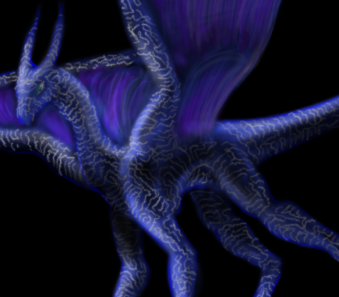
Here are True Facts about Avishraa!
avishraa is the name in imperial - a long-standing lingua franca - of the largest, and only habitable, natural satellite of a Saturn-like gas giant which is known, likewise in Imperial, Kastun. Avishraa is smaller than Earth, with about 88% of its radius and 87% of its surface gravity. It orbits close enough to be, barely, within Kastun's magnetosphere - fortunate, since it generates no significant magnetosphere of its own - but far enough not to lie within the radiation belts closer in to the planet, and like most moons of gas giants, it is tidally locked to Kastun.
For those who might comment that this would surely give Avishraa a long day-night cycle, you are correct. Its solar rotation period - essentially, the time from sunrise to sunrise - is about 54.7 Earth days. The official explanation for why Avishraa fails to alternatively bake and freeze is that it has a thick enough atmosphere with enough circulation to prevent the moon from being overwhelmed by temperature extremes. (Absent any climate modeling that tells me this can't happen, that remains the explanation; should someone present me with a climate model for the purpose of disproving the explanation, I will congratulate you sincerely for your dedication to science, but probably not change anything.)
I have not yet settled on a final map of the planet, but the one I eventually decide on will be generated by Songs of the Eons, which - although it is essentially the early stages of a kind of world simulation game - is already the most accessible and realistic planet-generator I've ever come across. Most of the action, however, occurs on one continent, tentatively called sekhaa, which is on the side of Avishraa facing Kastun. In the regions of Sekhaa adjoining the equator is a vaguely Amazon-like band of rainforests dominated by large river valleys, the largest of which is known as the cerulean_tangle. The Tangle is bordered on the north by a high and convoluted mountain range called the spine_of_sirdanth, on the other side of which - in the vast inlands of the continent - is a desert called the brightness. (All names are provisional, or at least yet to be translated into a non-English language).
Sekhaa is home to three sophont species (so far; I haven't ruled out others). The most advanced, and possibly the most numerous, are the takmar, who are most at home in the Tangle but also have a significant presence along the river valleys of the Brightness; their highest technological level is approximately equivalent to 1000 to 1100 AD on Earth. Their close evolutionary cousins, the xtauh, live throughout those portions of the Brightness that the takmar haven't colonized; most of them are either in the Bronze Age or, in marginal areas, late Neolithic. The third sophont species, the orghysh, are somewhat more distantly related to both of them, but are far less numerous or widespread and remain at a Paleolithic level of development.
Most of the attention in the setting focuses on the takmar and xtauh; the orghysh are very interesting in their own way, but don't figure very prominently in events. Geography and climate have kept them protected so far, but Avishraa, like Earth, is not guaranteed to be a nice world, and it's not unlikely that in the future they'll be driven extinct - or at least outnumbered and mostly assimilated.
Magic exists on Avishraa, in the sense of “supernatural abilities made available by factors other than the law of physics”, but there are at least three kinds. One is an empathic sense: the ability of one being to sense the emotional state of another without other sensory cues. This appears naturally in a number of Avishraan species, including all known sophonts, though it may be used in different ways by each one. A second is called enchantment, the use of signs and symbols to alter certain aspects of reality; this is theoretically available to any being capable of replicating the signs with relative accuracy.
Neither of the above, though, are really considered to be supernatural, or at least unnatural; one is simply another sense, while the other is a learned skill whose rules can be followed by anyone. The third, however, which in this setting is the one referred to as magic, is an inborn trait exercised via willpower - in other words, its users, who are referred to by others as witches and often by themselves as 'Chosen', are what would be known in Dungeons and Dragons terms as sorcerers.
The Chosen have a number of other quirks that differentiate them from the majority of takmar, but magical ability tends to overshadow the others. Their relationship with the larger world has a sort of X-Men vibe to it, in that many, many takmar are afraid or hateful of them, a not-entirely-unreasonable stance considering what some of them are capable of. Historically this factor has been a major part of the engine driving Avishraa-based roleplaying, either in its direct effect on the action or in how it's molded the way the characters behave. Often this has violent results; like I said, this is not necessarily a nice world.
That is how Avishraa do.