Table of Contents
Takma relations with other species
There are two other sapient species on avishraa, both of which the takmar have come into contact with. Their relations with each are described below.
Xtauh
Broadly speaking, the takmar and the xtauh are not prone to good relations. The primary driver of this is competition for land and resources; for well over a hundred cycles, takmar have steadily displaced xtauh from the river valleys of the southern brightness, relegating them to the desert and other marginal areas, and in many cases only the great environmental flexibility of the xtauh has prevented them from being driven extinct in those areas; they can survive on far less water than takmar can, and as a result the latter find it difficult to traverse large parts of the arid landscape.
Their mutual animosity has other components, however. The xtauh are the close evolutionary cousins of the takmar. Though neither species would be particularly inclined to acknowledge their similarities, there are nonetheless a good many of them. In a sense, however, it is the similarities that have contributed to the two species' fraught history with each other. They have differences in their appearance, psychology, and habits that while not completely alien are, perhaps, worse, in that they are familiar enough to cause a member of one species to think they understand what is happening, while being different enough to prove them wrong.
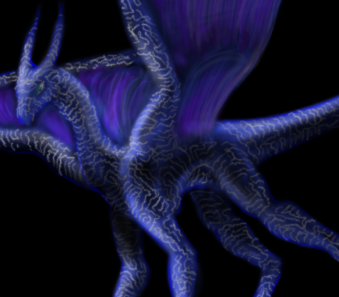
At the most basic level, the misunderstandings begin with a difference in their very bodies. Both takmar and xtauh rely heavily on their antennae for emotional expression and nuance; but the takma's antennae are swept backward from the head, relatively straight, while those of the xtauh are much longer, and extend sideways from the head, curling downward. While the way each species positions its antennae in various moods is actually analogous to that of the other - each species uses the same muscles to move them when, for example, alert - the results are visually different enough that the underlying similarities are not obvious to the untrained observer. To a takma xtauh have a permanent look of alertness and distress, as if paranoid or guilty - an impression not aided by the xtauh tendency to continually shift their gaze. While those with long experience with the other species can learn to recognize their emotional signals for what they are, there are regrettably few opportunities for it.
(Regardless, though each species looks, at best, unusual to the other, their body shapes are similar enough that, perhaps inevitably, sexual liaisons do occur. Though the size differences may cause some difficulty, they are broadly speaking physically compatible with each other. The two species also remain genetically close enough that interbreeding is possible, albeit risky.)
The two species also have genuine differences in their underlying attitudes toward society. Takmar are more prone to cooperate between themselves and to set aside competing interests for greater goals; they are fonder of hierarchies, if only for the prospect of advancement. Many of them are willing to settle for differences of status, provided they can extract some measure of benefit from it. While it has many downsides, this approach to things facilitates the development of large-scale, unified civilizations. Xtauh, for their part, are more individualistic, and more intensely clannish; they do not easily submit to the wills of most others. Their approaches to family and other forms of group identity are also different; takmar tend to be more inclusive in their groups, to have more extended definitions of those groups, and to be more willing to 'adopt' outsiders; xtauh societies tend to be more stringent, forming tightly-knit groups capable of close cooperation, but distinguishing clearly between insiders and outsiders, the latter of whose problems are secondary.
In short, the xtauh often appear to the takmar to be self-centered, standoffish, heartless, unmerciful, greedy, shifty, argumentative, and prickly.
Raiding by xtauh upon takma settlements in the Brightness is common, and many takma cities in turn conduct operations against the xtauh, killing or enslaving as many as they can find. The situation is one of perpetual bloody stalemate, as the takmar are limited in their reach into the desert, while the xtauh have neither the numbers nor the organization to overpower or drive out the takmar for long periods.
Throughout much of the takma-occupied Brightness, xtauh are either not permitted into cities or are allowed only as slaves. But some settlements do have trading relationships with certain xtauh groups, particularly those originating from north of the Brightness, from which they bring spices and other goods that the takmar have no access to. Takmar living in areas outside the Brightness - for example, the cerulean_tangle, where the bulk of takmar live - have generally either not heard of the xtauh at all or only as stories or legends, and are more likely to be curious and amused than hostile, though rarely friendly.
More recently, the rise of the great_illumination among the takmar of the western Brightness has opened a new path for interspecies cooperation. The universality of the movement's mission inclines it to accept the personhood, and especially the devotion, of xtauh as well as takma, and its antihierarchical undercurrents appeal greatly to xtauh who have no interest in the autocratic pronouncements of more organized religions. The region dominated by the Illumination is one of the few where the two species coexist in close proximity, and the religion is possibly the only one founded by takmar to have gained significant numbers of xtauh adherents. Because this area also contains most of the Brightness' ports, xtauh can sometimes be found living relatively peacefully in places like Ǣdyihòzh that can be reached by ship.
Orghysh
The orghysh are relatives of both the takmar and the xtauh, though their ancestors diverged far further back. Native to the Sea of Grass, the bulk of the species subsists on hunting and gathering in nomadic bands, limited to tools of stone, bone, and wood. In recent cycles, some orghysh have taken to remaining near takma settlements to trade for agricultural products and manufactured goods, especially metal tools.
The orghysh are simultaneously more and less inscrutable to the takmar than are the xtauh: more, since their body language has fewer parallels from which to extrapolate any understanding; yet less, since, unlike both takmar and xtauh, the orghysh are far less prone to muffle their empathic output. The complex but unshielded emotional profiles they present remind the takmar of those produced by children.
Though the Sea of Grass is not nearly as arid as the Brightness, it is also not as humid as the takmar prefer, and therefore, as in the Brightness, they tend to settle closely around rivers and lakes, though they are far less restricted in their movements beyond them. Since most of the orghysh are nomadic and in small groups, they can rely on smaller water sources than might be attractive to a permanent settlement, and there are no shortage of them; therefore, although friction due to competition has certainly occurred, it has not been as severe or as frequent as with the xtauh; the orghysh are more likely simply to move, or even trade, than to attack, though for particularly small and vulnerable takma settlements 'trade' may bear a certain resemblance to a protection racket.
Their technologically primitive existence, communal lifestyle, perceived childishness, and relatively low threat to takma life or livelihood, have combined to give them a reputation among the takmar somewhat akin to the human trope of the noble savage. Local takmar are not necessarily fond of seeing them around in person, and are likely to adopt a maternalistic or condescending attitude toward them, but have an appreciation for their ability to deal with life with a minimum of fuss - those who have also known xtauh are apt to contrast the two, since the latter seem to be veritable fuss generators.
Orghysh cannot fly, but are more agile than takmar, and their empathic sense is somewhat more sensitive to certain flavors of emotional complexity. Some of them have found a niche in takma society in the Sea of Grass as hired security or watchmen: their unshielded emotions make them as visible as a uniform; they are capable of detecting guilty bursts of unshielded emotion that might confound a takma guard; and, with long reaches and fast yet powerful movements, they are surprisingly unpleasant combatants considering their lighter weight.