Table of Contents
Draconiforms
Evolutionary history
The hexapods, a widely spread and diverse clade of six-legged Avishraan reptiloids, had already existed for millions of cycles at the time the first draconiforms appeared, some 6.5 million cycles before the present.
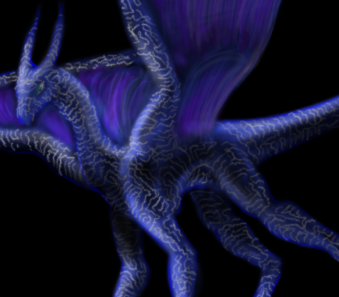
The ancestors of the draconiforms were small, active arboreal animals that leapt between tree branches in dense forest. The innovation of the first draconiforms was the development of their anterior pair of limbs into wide, flat surfaces - wings - suitable for gliding, allowing them to sail longer distances between trees. Although the early draconiforms enjoyed modest success in this role, consuming fruits, nuts and seeds, they remained mostly limited to it by the established dominance in other niches of other hexapods, as well as tantine and nitvighine clades.
The balance was disrupted at approximately 4.7 million cycles ago when a relatively sudden rise in sea level triggered mass extinctions throughout the world. The draconiforms, like many terrestrial clades, suffered severely, with many of their lowland forest habitats being flooded and drowned. Nonetheless, they fared better than many, gaining an early toehold in the new swamp-forest ecosystems that formed in and around the inundated areas. The rich fishing in these new habitats, and the lack of competition except from the distantly related aquatic vallakiforms, contributed to the appearance of piscivorous species and the development of true flight. Beginning around 4.4 million cycles ago, these adaptations in lifestyle contributed to a massive radiation of draconiforms into new niches and new evolutionary pathways.