This is an old revision of the document!
Prehistory covers the entire period up to the invention of writing on Avishraa. In this section only, dates are given in cycles before present (CBP).
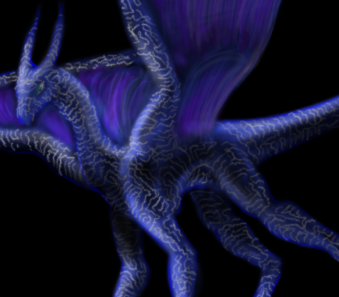
<csstimeline> <entry> date: ~850 million CBP title: A star is born description: The star Mikurmiya ignites, having formed from a molecular cloud then located in Seluurin's Palace. Its planets form and attain their present positions over the next million cycles, including Kastun and its largest moon, Avishraa. </entry> <entry> date: ~740 million CBP title: Oceans description: Avishraa's crust cools sufficiently - and is hit by infrequent enough heavy impactors - for water to condense out of its atmosphere and form the oceans. </entry> <entry> date: ~700 million CBP title: Abiogenesis description: Enriched by nucleotides and sugar molecules delivered by meteorites, increasingly sophisticated chemical reactions result in the first life forms on Avishraa. </entry> <entry> date: ~120 million CBP title: Animals description: The first animals appear, though they are at this point little more than sponges. </entry> <entry> date: ~95 million CBP title: Vertebrates description: The first vertebrates appear. </entry> <entry> date: ~93 million CBP title: Dance of the galaxies description: Having been approaching each other for the last hundred million CBP or so, Seluurin's Palace begins its first collision with the lenticular galaxy later known as the Mists of Khezri. As with most galactic 'collisions', one passes through the other with virtually no physical strikes, but their mutual gravitational pull ties them together and distorts their shapes. Mikurmiya is pulled outward toward the edge of the galaxy. </entry> <entry> date: ~90-80 million CBP title: Land plants description: The earliest land plants appear; at this stage they are mostly internally undifferentiated. </entry> <entry> date: ~75 million CBP title: Hexapods description: The first hexapods appear. These are descended from long-finned fish that use their limbs as navigational aids among the dense vegetation growing in the shallow waters of wetlands. </entry> <entry> date: ~65 million CBP title: Forests description: With the appearance of vascular plants, able to survive in a wider array of environments, the first trees appear. </entry> <entry> date: ~59 million CBP title: Amniotes description: While hexapods capable of leaving the water have now existed for some time, their eggs had to be laid in water. The development of eggs with a protective layer allowing them to be laid on land allows them to roam further away, and feast on the invertebrates that have thus far had inland areas to themselves. Early in hexapod history, the tantines diverged from the common ancestors of the nitvighines and zalkines. </entry> <entry> date: ~15 million CBP title: Another dance description: After having earlier passed through Seluurin's Palace, the Mists of Khezri had been slowed by the former's gravity, swung around, and come back. The two galaxies connected again and then began to separate, trailing a bridge of stars and dust between them. Mikurmiya is among the stars swept into this region; by the present day it is well between them, though still more closely associated with its parent galaxy. </entry> <entry> date: ~6.5 million CBP title: Draconiforms description: A clade of small, arboreal zalkines whose lifestyle had previously involved leaping between branches in dense forest - not unlike Earthly squirrels - develop their anterior limbs into wide, flat surfaces for gliding: the draconiforms. They enjoy modest success in the equatorial rainforests, feeding on seeds, nuts, and fruit though the air is currently dominated by flying nitvighines. </entry> <entry> date: ~4.4 million CBP title: Dragons errywhere description: Sea level rise over the past few hundred thousand cycles triggers a widespread shift in habitat distribution and accompanying mass extinctions. The preferred lowland forests of the draconiforms are temporarily decimated, but the appearance of extensive marshes and, eventually, mangroves, spur them to develop the capacity for true flight, and to adapt to a piscivorous diet. This proves to be the beginning of a period of [[https://en.wikipedia.org/wiki/Adaptive_radiation|adaptive radiation, with draconiforms diversifying into niches once held by nitvighine species now extinct or in decline. </entry> </csstimeline>