Table of Contents
Ixhwanlhai
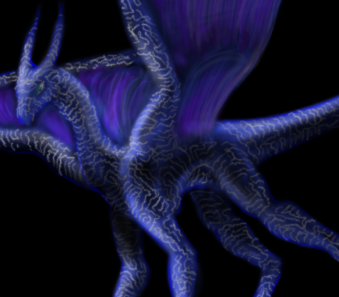
The Ixhwanlhai [i.xʍan.l̥ai] are a xtauh ethnolinguistic group, or rather meta-group, most spread throughout the central and north-central Brightness. There is little group consciousness at this level; though individuals who have the opportunity to be familiar with other Ixhwanlhai are generally aware that they have more in common culturally than with non-Ixhwanlhai, they identify mainly with their own subgroup and generally view other subgroups as foreigners who happen to speak the same language and are slightly more 'civilized' in their behavior. This is not necessarily a barrier to conflict, and indeed some of the worst rivalries are between subgroups that have the most in common (cf. the Flitting Hargh People and the Jagged Tooth People, who diverged from each other within historical memory and differ mainly in location).
Naming traditions
Family names
The Ixhwanlhai peoples do not use family names as such. Where clarification is needed, they may indicate parentage (son/daughter of X) or further matrilineal descent (son/daughter of X, daughter of Y, daughter of Z); if a male is married, he may instead identify with his wife (husband of X); if a member of a male band, he may identify instead as a member of it (brother of the X), especially if his family is unlikely to be known where he is speaking.
Unisex names
Male and female names among the Ixhwanlhai differ in form, but their cores are chosen in the same fashion.
Traditionally, the name-core is chosen by divination. After a child hatches, one of its fathers is tasked with the ritual responsibility of watching the environment for a set number of “sleeps”, or periods of sleeping and waking (one of these approximates a vigil, but since Ixhwanlhai do not use clocks, the exact period of time involved will vary with how long the assigned father is awake or asleep). During this time, the father takes note of significant events or possible omens. At the end of the ritual period, if the child is still alive and relatively healthy, the father will provide the child's mother with a word, usually a simple noun or adjective, that relates to one of the events that he has noted, which will serve as the name-core.
It will then be prefixed according to the child's gender: je [d͡ʒe] for females and an [ɑn] for males, and the mother will bestow the name in a ritual in which the child is anointed with earth and water. While it is taboo for a name to be used by more than one living child of the same mother, it is considered an honor for a child to receive the same name as a sibling who has died.
(If the name-core is an adjective, which in Ixhwambexti are often declined for gender, then it will also be in the form appropriate for the child's gender.)
Other names
Due to the way name-cores are chosen, it is relatively common for multiple individuals in the same area to have the same given name. While in formal or other emotionally distant contexts, it is sufficient to distinguish between individuals using a matronymic or other relational name, this usage is considered overly stiff in conversations between bandmates or close friends.
Instead, an individual's social circle will often collectively and publicly bestow a semi-official nickname upon them - usually this relates to something memorable (if not necessarily important) that they've done or a distinctive personality trait, but is occasionally based on appearance. A nickname given in this fashion may be either serious or humorous - even lightly teasing - but it is generally considered bad form for it to be purposely embarrassing or insulting. It is considered equally bad form for the recipient to refuse to accept the nickname, though it is perfectly within one's rights to decide when someone becomes close enough to be on a nickname basis.
In certain family situations, an individual may be addressed by only the core of their given name, with the prefix dropped (for example, An-uxhwi would be shortened to simply Uxhwi). This is an expression of endearment and extreme familiarity, and its use is tightly restricted:
- It may only be used when directly addressing an individual, not when referring to them. This even includes quotations or reported speech, and it is expected that such usages would 'edit' the name to include the prefix where the latter was not actually used.
- It may only be used by very near relations: siblings, parents, or children. Whether it is considered permissible for a mate or spouse to use it varies by tribe; most do, but others maintain that one who did not share a person's formative environment cannot know and understand them in the same way as those who did, and that the required familiarity therefore cannot be present regardless of present relationship.
- It may only be used when those present are all members of the same nuclear family. For example, it would be appropriate for a father to call his child by the name-core in the presence of his other children and their mother, but not in the presence of his parents or siblings; likewise, he might call his sister by her name-core in the presence of his other siblings or his parents, but not in the presence of his own mate and children.
Ideals
Beauty ideals
Gender ideals
Courtship ideals
Relationship ideals
Customs
Customary codes and shared values
Major language groups and dialects
The predominant language of the Ixhwanlhai is Ixhwambexti. There are a number of dialects which are for the most part easily mutually intelligible with each other.
The most divergent is the southern dialect, which remains in use in small, scattered enclaves in and around the northern Tumbles; this was the original homeland of the Ixhwanlai peoples, and the speakers of the dialect represent the relatively few remaining members who have not been killed or driven off by takma settlers.
The northwestern and northeastern dialects are closer to, and more influenced by, each other than they are to the southern one. These are spoken by the descendants of several waves of Ixhwanlhai who fled north into lands relatively inaccessible to takmar. The tribes of the Jaruk Heights, such as the Jagged Tooth People and An-uxhwi's Flitting Hargh People, are mostly speakers of the northeastern dialect, while the Hidden People in the deserts to the south and west are among the speakers of the northwestern dialect.
Within, and surrounded by, the areas dominated by the two northern dialects, there remain pockets of the languages spoken before the arrival of the Ixhwanlhai. While some have been influenced culturally by the latter to the point that they might be considered, to a certain point, Ixhwanlhai themselves, many remain stubbornly aloof from, if not overtly hostile to, their newer neighbors.
Common etiquette
Dress code
As with most takma and xtauh societies, clothing is not generally a social requirement, and when indoors or in a comfortable environment, nudity is entirely acceptable.
In practice, however, due to the extremes of temperature found throughout most of the arid environment inhabited by the Ixhwanlhai, prudence dictates that when outdoors they must often wear a cloak and a hood or hat to keep out the worst of the heat and cold. When moving around, most also wear a pouch or pack secured to the chest to carry tools and other small items.
Among most Ixhwanlhai peoples, it is expected that a married male wears his wedding ring (or rings) on his antennae when not in his wife's company, though many - as a display of devotion and fidelity - only remove them when in bed.