Table of Contents
Chosen
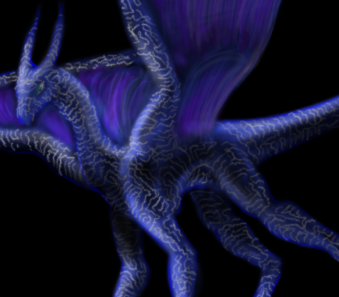
The Chosen are a subtype of the takma species. Although in many respects they are alike, and can certainly interbreed, in a few important respects, they are quite different.
One is their size: as adults, they are considerably smaller than other takmar. Another, their lifespans, which (all else being equal) are considerably longer, especially if lifegivers are present to deal with any health issues. But the most important difference is that they are inborn with the capacity to use innate magic, something which no other takmar are capable of and which frequently evokes a considerable amount of negative sentiment among the nonmagical takmar.
'Chosen' is a term applied by the Chosen to themselves, or at least those who have achieved a certain sense of group identity (as in the Citadel); these same individuals refer to the nonmagical as the 'Unchosen'. Nonmagical takmar, for their part, use a variety of terms, often unflattering, for the Chosen; these vary with language and situation but can often be plausibly rendered in English as “witches”.
Permit me to speak of something. When I was young, before I found the Citadel, I wandered among the Unchosen. I hid for a time in a great city with an Unchosen couple, who passed me off as a young niece; and although I was not truly a child, I was young enough and small enough that with limited exposure to the public the subterfuge worked.
There came a day when we went to the market, and I went with them, wearing a cloak to obscure my age. I could sense, in the future, something important, but I could not tell what it was; but, behold, in the midst of the square, the authorities were condemning a prisoner before the crowd. It was a Chosen.
They executed him, then and there, with the crowds cheering at the sight of his blood; but the next prisoner to stand on the platform was she who had dared to harbor him - parent, friend, or kindly stranger, I did not know which. And the executioner said this to the crowd: 'Death is the fate of the witch, who is born to the thrall of dark powers; but which is worse, she who serves them from birth, or she who chooses to serve?'
And, again to thunderous applause, her throat was torn out, and she was left to die slowly on the platform, gasping fruitlessly for the breath she could no longer hold. And as I watched this, a sick look came over the faces of my own protectors; and in the many paths of the future, the one in which they gave me up to save themselves bloomed and grew. And I left, as soon as they fell asleep, for I had learned something about the Unchosen that was important. What you say about all Unchosen not being necessarily foe is not correct. Not all Unchosen are necessarily ill-disposed toward us. But all of them - all of them - are foes, and they should be treated so.
Transmission
The state of being Chosen is nominally hereditary: the children of two Chosen are themselves Chosen, almost without exception, and the children of two Unchosen are almost always Unchosen (the children of a mixed couple tend to have a 25% chance of being Chosen).
That said, magical aptitude can, and does, appear occasionally in children of Unchosen - something on the order of one in every several thousand - even when there is no history of Chosen ancestry. Therefore, heredity is evidently not the only factor involved. The appearance of Chosen children to non-Chosen parents appears to be more or less random - no known factor of parentage or upbringing appears to affect it. It simply appears. Once it has appeared, as previously mentioned, it is hereditary; outbreaks, as such, do not occur.
While it appears that some capacity for magic can be transferred from a Chosen to another individual with the transplantation of the appropriate source tissue from the donor (see magic for details), the state of medical technology effectively prevents this technique from being widely or effectively used. The usual instance in which it is occurs is Spark magic, which is carried in the blood and is therefore relatively easily transferred. The benefit to the recipient, however, is temporary, as it diminishes with the body's steady replacement of the donor's blood cells.
Mechanism
Although some progress has been made on understanding the underlying mechanism behind magic, the ultimate reason why some individuals are able to use it and others are not is unknown. While the way it appears suggests a kind of heritable mutation - one that is also capable of appearing at a non-negligible rate among the takma population at large - the earliest history of the condition does not quite fit this model.
Lacking a scientific understanding of genetics, the question is not likely to be resolved by anyone involved anytime soon. The nature of the Chosen is generally ascribed to supernatural powers of one kind or another, depending on who is doing the ascribing; this is the origin of the term 'Chosen', the implication being that they were chosen to receive magic by the gods.
Characteristics
Magical ability is the most defining characteristic of being a Chosen. Each Chosen is born into it, and moreover is born into particular types of it: usually one, but occasionally two. Each Chosen is theoretically capable of learning any skill available to the type of magic they have, but the magic of other types is not available to them.
There are generally held to be eight magic types; they are, in approximate order of rarity:
- Element, the control and shaping of individual substances
- Substance, the ability to combine, transform, and transmute substances
- Shift, the ability to change bodily form
- Semblance, the manipulation of light and images
- Spark, the manipulation of energy
- Mind, the ability to affect and alter minds, as well as telekinesis
- Life, the ability to affect the internal functioning of living things, and alter their genetics and characteristics
- Span, the ability to see through time and space, and manipulate the latter
The most obvious physical marker of the Chosen is their size. On average, an adult Chosen will be about 75% of the length of an Unchosen of the same sex and build, and less than half the size or weight. As the larger sex, female Chosen can, if enough of their bodies are covered, pass for male Unchosen, but male Chosen cannot generally be mistaken for anything but children. The association of small size with magical ability means that Unchosen who merely happen not to grow to a “normal” size are frequently targeted by their hysterical compatriots.
Chosen also take a considerably longer time to reach old age than the Unchosen; while the latter rarely live past 18 cycles even under the best circumstances, a Chosen may live twice that, a full hexatrigesimal, if well cared-for and regularly attended by lifegivers, though this only happens with any frequency to the inhabitants of the Citadel.
Alignment
A final characteristic of the Chosen that remains relatively unnoticed by Unchosen is what the Chosen themselves think of as alignment. Each Chosen tends to develop, as they mature, an associated set of personality traits and behaviors that is either Srian (orderly) or Kaean (chaotic). Alignment has no direct connection to magical type or development, but is an important factor in Chosen societies due to the role it plays in relationships, both between individuals and between individuals and society.
Srians
Srians are said to be those favored by seluurin, the goddess of Order. They prefer neatness, consistency, and definition; they are natural organizers, planners, and bureaucrats.
They prefer to undertake actions whose consequences can be foreseen - or, failing that, can be the responsibility of someone else - and to form plans for the future. They are attracted to well-defined hierarchies and work well within them, and, compared to Unchosen takmar, are more likely to be satisfied with their place, not attempting to pursue promotion or demotion except on merit. They settle easily into sedentary, domestic lifestyles that they can consider “normal”.
Their thought processes can be described as flowcharts, with long branching chains of “if X, then Y”. By its very nature, this way of thinking has its limits on how many eventualities can be covered, and if confronted by a situation for which one has no contingency plan, a Srian will likely become distressed - intellectually as well as emotionally upset - until he or she has an opportunity to fabricate a plan in response.
Srian art and architecture tends to rely on geometric shapes and proportions and extensive symmetries.
Kaeans
Kaeans are said to be those favored by khezri, the goddess of Chaos. They are inclined toward impulsiveness, case-by-case judgment, and independence, and are frequently artists and explorers.
Kaeans are naturally messy - not necessarily dirty, because they understand the requirements of hygiene, but are not inclined to organize either their personal space or their lives in the name of efficiency. They prefer to take life as it comes, and while knowing consequences can be useful - such as if a situation is likely to result in harm or death - their standards of evidence for how bad a given outcome is likely to be are much looser than those of Srians. They have a tendency to resist and question hierarchies, and although most do not reject them outright, they frequently challenge the right of the hierarchy, or the authority at the top of it, to make a decision on a given topic. Topics with even the faintest political overtones tend to result in noisy debates and arguments. And they have a tendency to seek out and try new things and see new places.
The Kaean thought process can be thought of as a storm cloud, with lightning flashing back and forth between different portions of it. One takes up or drops ideas as they occur, and spends time on each depending on how important it is to them. They are often innovative thinkers but do not always sufficiently consider the full implications when they decide to enact their ideas, and yet they chafe at the prospect of chaining the future up in plans and precautions.
Kaean art and architecture tends toward variety in colors and irregular, often organic, shapes. Tie-dye, in the strictest sense, does not yet exist on Avishraa, but if it did would be perfectly suited to their aesthetic sense.
Development
One is Chosen from hatching, but one is not recognizable as Chosen at hatching.
A young Chosen is more or less indistinguishable from his or her Unchosen peers up till the age of somewhere between five-sixths and one whole cycle; they may be small for their age before this point, but usually not to a point considered abnormal, and they cannot perform magic. The chances of both increase sharply after the one-cycle mark; growth becomes noticeably slower than the normal course, and their magic begins to manifest, usually in small ways associated with emotional outbursts.
Indeed, a young Chosen's magical development appears to be tied closely to their emotional development. They will usually learn to keep their magic under conscious control roughly in tandem with their ability to keep their emotions shielded from empathic detection, which in the normal course of things is fully developed by early adolescence. Those who suffer from mood disorders - or other mental states which are characterized by interrupted or absent empathic shielding - will generally, even as adults, also exhibit increased instances of subconscious or unintentional magic use.
Aside from this, by mid-adolescence - 2.5 cycles or so - the young Chosen will generally have a firm grip on their magic, though how much they are capable of doing with it will vary greatly by natural aptitude and training.
Treatment and prevention
A Chosen is born so, and remains so forever; there is no effective means to end the condition except by death. This method is often employed enthusiastically by those Unchosen dedicated to “curing” witchcraft.
Because a Chosen's magic resides in their organs, it is theoretically possible to remove their magical abilities by physically removing the organ that houses the magic of their type. That said, it is rarely possible to do this without killing the individual in question; for an illusionist, for example, it would require flaying them of most of their skin and scales.
Many credulous Unchosen employ various totems, charms, or wards over their nests to prevent their children from being cursed to be Chosen. The low occurrence of Chosen children to Unchosen parents is enough to make most of them believe in the efficacy of these measures - which vary from culture to culture - but, were a scientific study to be conducted, it would find any number of instances in which they had no effect.
Associated conditions
Chosen possessing most types of magic are measurably more susceptible to genetic errors, tumors, and cancers, especially in those organs in which their mana resides. The two rarest types of Chosen are generally immune to this tendency:
The magic of lifegivers tends to protect them from any major health issues, including cancer, and can be used for the same effect upon others; as Chosen age, regular visits to a skilled lifegiver are an essential factor in a good life.
The immunity of oracles, by contrast, is specifically to magic-related genetic errors and the resultant conditions. The reasons for this are not well understood, but it may not be a coincidence that Span magic, unlike every other type, has never been successfully associated with any particular physical organ.
History
There have been stories and legends of magic-using takmar for as long as there have been takmar, but few that verifiably enter the realm of reality; many such depictions do not match the traits of the modern Chosen, and could easily be simple fictions. There are some examples that either match the descriptions or are ambiguous enough that they could, but the overall impression is that for most of history the Chosen either did not truly exist or, if they did, were rare and had relatively little impact on the world.
The earliest verifiable reports of Chosen date back to around 3 Storm, where they begin appearing in Imperial records of the turbulent era of civil war and political struggle known as the Overturns, frequently mentioned as a symptom of the troubles and a sign of the gods' judgment. Although the state of the records during the Overturns was such that it is impossible to determine whether the Chosen spread from an initial point or began appearing many places simultaneously, it appears that their emergence occurred within a startlingly short time; they were being reported throughout the Empire by 8 Storm and only shortly thereafter by those few non-Imperial civilizations of the time practicing extensive recordkeeping.
The initial reactions to the Chosen appear to have been bewilderment and uncertainty, and they were variously hailed as representatives of the gods, or agents of their wrath, or as aligned with dark powers. Although the common people remained superstitious about them - an attitude encouraged by the priesthood, who saw a threat to their authority - they received a measure of toleration because of their immense usefulness to society, and the Six Houses that ruled the Empire began to employ them in their battles with breakaway provinces. They became increasingly associated with the First House, which provided the largest portion of the Empire's military, and became integrated with their units far more than occurred under the other Houses.
This alliance ultimately served them in poor stead during what came to be called the Divine Overturn, which lasted from 12 to 16 Storm. The First House, having forced the submission of many breakaway regions of the Empire, had prepared to embark upon the reconquest of the wealthy abethine_coast. The Abethines, most of whose ruling matriarchs claimed descent from the famous general and namesake Abeth and remained allied to one another, made overtures to the Empire seeking terms for peaceful readmission. The other five Houses, seeking to put a brake on the increasing dominance of the First House, were inclined to allow the Abethines back into the fold with minimal concessions, much to the anger of the First House itself, who expressed the belief that the Abethines were not being appropriately chastised for their period of disobedience. When the First House was outvoted on the matter in the Council of Six, they responded by marching their armies on the heartland of the Empire, with the intention of restoring 'firm government'.
The Chosen, and their magic, were employed by both sides in the ensuing war, which as a result was remembered as one of the most destructive of not only the Overturns, but of all the wars in history. Jungles were burned, the earth cracked, rivers diverted, cities torn down; the most terrible deaths were visited among soldiers and civilians alike. It was only after long campaigning and the alliance of the remaining five Houses with the Abethines - whose seniormost representatives were instated as the Seventh House - that the First was subdued. The bulk of the Chosen who had served with the First were massacred, and many of the rest, from both sides, were attacked by vengeful, desperate mobs. In an act of breathtaking political opportunism and historical revisionism, supported by the priesthood, the government portrayed the Chosen as demonic agents, having either caused the war or exploited both sides of it for their own ends, and the First House as their willing tools. The Seventh House proceeded to wipe out every member of the First House, from old to young, and the Empire attempted to exterminate the Chosen along with them.
Those Chosen that were not killed went into hiding or fled. Many of them huddled in the wastelands and ruins that had been created during the war, but as the Empire recovered were generally discovered as the lands were reclaimed. Others departed the borders of the Empire entirely, settling in lands that had less antipathy toward them. But one major nucleus of Chosen settlement was a rugged, isolated valley, nestled amid the southern rises of the spine_of_sirdanth, technically within the borders of the Empire but beyond its notice or effective political control; it was initially named the Valley of Sanctuary, but eventually became known by the name of its original and primary settlement: the Citadel.
The initial colony numbered only a hundred or so, and grew only slowly for many cycles thereafter; there were few new additions to the population from outside, for the Empire remained efficient at enforcing its extermination order against the Chosen and few escaped it. But as the Empire began its final decline after the beginning of the Vigil Era and provinces and cities began to fall back on their own resources and focus on their own concerns, more Chosen began to survive long enough to escape, and, whether by chance or by divine guidance, to make their way to the Citadel. The increasing flow of incoming Chosen became a flood after the final collapse of Imperial authority at the end of the Vigil Era.
The collecting together of large numbers of Chosen in one place of their own, for perhaps the first time in history, opened the door to a process of self-discovery. At the Citadel, they were not merely witches, but Chosen, and surrounded by others who shared their abilities and their experiences; people like them. And although few of them had had much time to practice and perfect their magic, in the presence of each other they had ample opportunities to learn, and to apply what they learned. What had begun as a village, stealthily carved from stone, became a city, its streets and passages filled with wonders such as only magic could make possible; what was once a nearly empty valley, chilly and windswept, became dotted with villages, towns, and homes, made fertile by lifegivers, warmed by energists, sculpted into elaborate terraces and pools by elementalists.
By 50 Cloud or so, the Citadel was the home of a small yet prosperous civilization, with a loose form of government. But to many who lived there, it was increasingly not enough for the Chosen to remain satisfied with their own lot, to remain self-contained, to wait for new Chosen to come to them. There were many brothers and sisters, out in the world, who did not know the way, and who were trapped among the Unchosen. Despite the misgivings of those who feared discovery, scouts began going out, seeking those who were still lost, to bring them to their rightful home.
Within the Citadel, the Chosen are among their own kind, and enjoy a freer and more fulfilling existence than outside; although not everyone enters into the vocation they would prefer, this is far more often due to economic or social pressures rather than any form of coercion. Unchosen who find themselves in the Citadel are often discriminated against, but between Chosen tensions are relatively minor. While sometimes refugees of varying cultural backgrounds have difficulty integrating into Citadel society, by far the most complicating factor is the differing attitudes of Srians and Kaeans toward government and its proper scope - see the Citadel article for more details; that said, relations are mostly peaceful.
In recent cycles, an unofficial but increasingly influential movement has taken hold in the Citadel. Going beyond the simple mistrust of Unchosen and attempts to draw in refugee Chosen, this somewhat apocalyptic sect predicts - and even advocates - the eventual collision of Chosen and Unchosen, and makes it its mission to prepare the Chosen to fight and win the upcoming war. Members of the movement are often especially active in locating refugees, who they see, in the worst case, as addition to Chosen numbers, and in the best case as new recruits. Their refugee work and their assertive stance against the Unchosen have both won them a great deal of sympathy, and the movement's leaders have become more politically powerful.
Cultural reception
The state of the Chosen beyond the Imperial sphere is undetermined, but within it they are a tiny, and fairly reviled, minority; in many places the old Imperial law demanding their extermination is either directly in force or informally continued as policy. In those places where they have some measure of toleration, it is generally directly correlated with their usefulness, and deeply unpopular with the population at large; their lives are often substantially circumscribed, if indeed they are not actual slaves or prisoners, and are generally, at the very least, not permitted to travel or to have sex. Not surprisingly, they often make attempts to escape their situations, but even if they succeed have few places where they are welcome.
While in many cases they can conceal their abilities, they are less often able to conceal their unusually small size, which is considered a giveaway - even Unchosen who remain small by a certain age are liable to be labeled as witches, and although in some jurisdictions this is not used as a basis for legal discrimination, popular outrage often does just as thorough a job and is rarely punished.
There are only two places where they are known to be welcome; the most prominent is the Citadel, essentially a civilization by and for the Chosen and closed to all others. The other one, and the only one where the Chosen are integrated and welcome to any great degree among their nonmagical brethren, is Ǣdyihòzh, an Abethine city-state that for this, among other reasons, is viewed with dislike and distrust by its neighbors.
The name “Chosen” is most known and used in the Citadel, having derived that name for themselves from a traditional belief that their magical abilities are a gift from the gods - whether siathar, lamnar, all collectively, or deities of other religions. This self-designation is not well-known outside the Citadel, and most other takmar, in various languages, use terms that are approximately rendered by the English word “witch”; in Contemporary Imperial this is sibekh, plural sibekhar.
Takmar as a species have no term for those that are not witches; it is simply being normal. Those who refer to themselves as Chosen, however, frequently have a need to differentiate themselves from the general population, and so, understandably enough, refer to other takmar as the Unchosen. Most takmar are unaware of this label, and are unlikely to take it well should they become aware.