xtauh:start
Differences
This shows you the differences between two versions of the page.
| Both sides previous revisionPrevious revisionNext revision | Previous revision | ||
| xtauh:start [2020/08/21 19:32] – shyriath | xtauh:start [2024/01/25 14:51] (current) – shyriath | ||
|---|---|---|---|
| Line 1: | Line 1: | ||
| - | The species known as the **xtauh** in [[language: | + | ====== Xtauh ====== |
| + | The species known as the **xtauh** in [[language: | ||
| ===== Numerical characteristics ===== | ===== Numerical characteristics ===== | ||
| Line 10: | Line 11: | ||
| ===== Anatomy and physiology ===== | ===== Anatomy and physiology ===== | ||
| ==== Shape and features ==== | ==== Shape and features ==== | ||
| - | //See also the articles on the [[xtauh: | + | //See also the articles on the [[xtauh: |
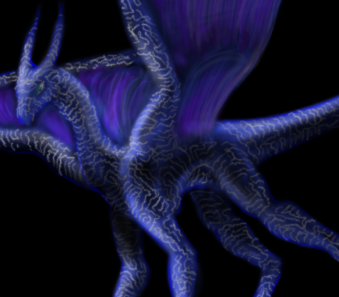
| - | Xtauh are large [[species: | + | Xtauh are large [[species: |
| The head is of a more or less aerodynamic shape with a long muzzle. The teeth are generally conical, although those toward the rear of the mouth have truncated, almost flattened, points. The nostrils can seal while underwater. The eyes have catlike, slitted pupils, and are usually light in color, typically some shade of blue, gray, or washed-out green. Other colors, such as gold, are possible. Xtauh do not have ears, but instead a pair of antennae; long, flexible, backwards-sweeping structures with hollow interiors. The set of the eyes and antennae, and to a lesser extent the mouth, play a major role in xtauh facial expressions. | The head is of a more or less aerodynamic shape with a long muzzle. The teeth are generally conical, although those toward the rear of the mouth have truncated, almost flattened, points. The nostrils can seal while underwater. The eyes have catlike, slitted pupils, and are usually light in color, typically some shade of blue, gray, or washed-out green. Other colors, such as gold, are possible. Xtauh do not have ears, but instead a pair of antennae; long, flexible, backwards-sweeping structures with hollow interiors. The set of the eyes and antennae, and to a lesser extent the mouth, play a major role in xtauh facial expressions. | ||
| ==== Motion and locomotion ==== | ==== Motion and locomotion ==== | ||
| - | //See also [[xtauh:body-language|Body language]].// | + | //See also [[xtauh: |
| Xtauh are capable of either a bipedal or quadrupedal gait on land. The latter, which involves curling the fingers and placing the weight on the knuckles, is more comfortable for both standing and walking/ | Xtauh are capable of either a bipedal or quadrupedal gait on land. The latter, which involves curling the fingers and placing the weight on the knuckles, is more comfortable for both standing and walking/ | ||
| Line 23: | Line 24: | ||
| The xtauh neck is only slightly longer, proportionally speaking, than a human neck. It is more flexible, but far more so toward the chest and the sides than toward the back; when quadrupedal, | The xtauh neck is only slightly longer, proportionally speaking, than a human neck. It is more flexible, but far more so toward the chest and the sides than toward the back; when quadrupedal, | ||
| - | Xtauh frequently have trouble reaching their own backs. The neck is not long or flexible enough to twist the mouth around to reach, nor can the forelimbs rotate backward far enough to reach anything but the far upper and lower back. The wing-thumb can be use to clumsily scratch the upper back, but this is frequently not considered satisfying; the tail is prehensile, but has relatively poor motor control. [[xtauh: | + | Xtauh frequently have trouble reaching their own backs. The neck is not long or flexible enough to twist the mouth around to reach, nor can the forelimbs rotate backward far enough to reach anything but the far upper and lower back. The wing-thumb can be use to clumsily scratch the upper back, but this is frequently not considered satisfying; the tail is prehensile, but has relatively poor motor control. [[xtauh: |
| In Avishraan gravity, which is slightly over 86% that of Earth' | In Avishraan gravity, which is slightly over 86% that of Earth' | ||
| ==== Senses and perception ==== | ==== Senses and perception ==== | ||
| - | //See also [[xtauh:senses|Senses]].// | + | //See also [[xtauh: |
| The xtauh senses are broadly comparable to those of humans, at least to the extent that they would be able to detect many of the same stimuli. That said, their visual and auditory ranges are not identical, and the xtauh sense of small is somewhat poorer. | The xtauh senses are broadly comparable to those of humans, at least to the extent that they would be able to detect many of the same stimuli. That said, their visual and auditory ranges are not identical, and the xtauh sense of small is somewhat poorer. | ||
| - | Xtauh also have a sense that is absent in humans: the ability to directly perceive emotions and feelings from other beings, referred to as the empathic sense. This is not unique to xtauh among Avishraan species; several related species possess it, and [[concept:empathic-sense|different manifestations of the same sense]] have arisen independently many times throughout the evolutionary history of the world. | + | Xtauh also have a sense that is absent in humans: the ability to directly perceive emotions and feelings from other beings, referred to as the empathic sense. This is not unique to xtauh among Avishraan species; several related species possess it, and [[concept:empathic_sense|different manifestations of the same sense]] have arisen independently many times throughout the evolutionary history of the world. |
| ===== Taxonomy and evolution ===== | ===== Taxonomy and evolution ===== | ||
| ==== Ancestry and relatives ==== | ==== Ancestry and relatives ==== | ||
| - | The closest living relatives of the xtauh are a species referred to in [[avishraa:place:brightness|Brightness]] [[language: | + | The closest living relatives of the xtauh are a species referred to in [[geography:sekhaa: |
| - | The ancestors of the takmins diverged some 74 thousand cycles ago from those of the [[species: | + | The ancestors of the takmins diverged some 74 thousand cycles ago from those of the [[species: |
| ==== Variations ==== | ==== Variations ==== | ||
| - | Xtauh have a much higher variability in skin color than humans do, even within the same population, and it is relatively common for children to be a different color from either parent (see [[xtauh:scales-and-coloration|Scales and coloration]] for details). The physical races that make up the xtauh species, therefore, tend to be defined based on other factors, though some colors are more common for some than for others. | + | Xtauh have a much higher variability in skin color than humans do, even within the same population, and it is relatively common for children to be a different color from either parent (see [[xtauh: |
| - | There are, broadly speaking, | + | There are, broadly speaking, |
| - | * // | + | * // |
| - | * //Sunset:// On average, taller and stockier than wasteland xtauh, and with wings more similar in proportion to those of takmar. They tend toward higher proportions of reds, oranges, yellows and whites and fewer browns. They are the predominant race in the northern Brightness and the grasslands beyond it, as well as along the eastern slopes of what the xtauh call the [[avishraa:place:refuge-range|Refuge Range]]. As these areas are the most thickly settled of the xtauh habitats, sunset xtauh make up a majority of the total population. | + | * //Sunset:// On average, taller and stockier than wasteland xtauh, and with wings more similar in proportion to those of takmar. They tend toward higher proportions of reds, oranges, yellows and whites and fewer browns. They are the predominant race in the northern Brightness and the grasslands beyond it, as well as along the eastern slopes of what the xtauh call the [[geography:sekhaa: |
| - | * //Mountain:// They have a build stockier than that of the sunset xtauh, but the size and wingspan of the wasteland xtauh, a shorter muzzle than either; the population is mostly browns and oranges, with some reds but very few yellows or whites. They predominate in the far eastern Brightness and the adjacent mountains known as the [[avishraa:place:nest-of-the-sun|Nest of the Sun]]; there are rumors that they have also crossed the mountains into the rift valleys and settled there. | + | * //Dunscale:// They have a build stockier than that of the sunset xtauh, but the size and wingspan of the wasteland xtauh, a shorter muzzle than either; the population is mostly browns and oranges, with some reds but very few yellows or whites. They predominate in the far eastern Brightness and the adjacent mountains known as the [[geography:sekhaa: |
| + | * // | ||
| As with human races, the boundaries between them are not distinct and there are many areas where considerable mixture has occurred. | As with human races, the boundaries between them are not distinct and there are many areas where considerable mixture has occurred. | ||
| Line 53: | Line 55: | ||
| ===== Biology ===== | ===== Biology ===== | ||
| ==== Genetics and reproduction ==== | ==== Genetics and reproduction ==== | ||
| - | //See also [[xtauh:reproduction|Reproduction]].// | + | //See also [[xtauh: |
| In terms of sexual behavior, neither males nor females are much inclined toward monogamy. Socially, however, most xtauh societies are [[https:// | In terms of sexual behavior, neither males nor females are much inclined toward monogamy. Socially, however, most xtauh societies are [[https:// | ||
| Line 76: | Line 78: | ||
| ===== Ecology and habitats ===== | ===== Ecology and habitats ===== | ||
| - | Xtauh are almost entirely restricted to the continent of [[avishraa:place:sekhaa|Sekhaa]]. Although they enjoy being immersed in water and are good swimmers, they [[xtauh: | + | Xtauh are almost entirely restricted to the continent of [[geography:sekhaa:start]]. Although they enjoy being immersed in water and are good swimmers, they [[xtauh: |
| - | The xtauh are environmentally flexible creatures, able to tolerate a wide range of temperatures and climates. Although they do not do as well with low temperatures as humans do, they are much more comfortable in arid climates; unlike the takmar, who die relatively easily away from water and humidity, their bodies conserve moisture relatively easily and their dominance of the deserts of the [[avishraa: | + | The xtauh are environmentally flexible creatures, able to tolerate a wide range of temperatures and climates. Although they do not do as well with low temperatures as humans do, they are much more comfortable in arid climates; unlike the takmar, who die relatively easily away from water and humidity, their bodies conserve moisture relatively easily and their dominance of the deserts of the Brightness is due largely to the fact that the takmar cannot follow them any significant distance from the river valleys. Also unlike takmar, they do not require immersion in water for their health; they will bathe in it if there are sufficient quantities around, but in the desert they typically roll in sand or gravel to get clean. |
| + | |||
| + | As a result, low concentrations of nomads and [[https:// | ||
| - | Lately, the development of [[concept:glyphic-teleportation|glyphic teleportation]] has allowed the colonization of other worlds, though so far this has only been done on an individual basis; no significant xtauh populations have been established off of Avishraa. | + | Lately, the development of [[concept: |
| + | |||
| + | ==== Population ecology ==== | ||
| ==== Dietary needs and habits ==== | ==== Dietary needs and habits ==== | ||
| - | //See also [[xtauh:diet-and-agriculture|Diet and agriculture]].// | + | //See also [[xtauh: |
| Xtauh have a strong preference for the taste of meat and other savory foods, and they cannot process plant foods with large amounts of cellulose, such as leaves and stems. That said, they are [[https:// | Xtauh have a strong preference for the taste of meat and other savory foods, and they cannot process plant foods with large amounts of cellulose, such as leaves and stems. That said, they are [[https:// | ||
| - | Having a fairly delicate sense of taste, | + | Having a fairly delicate sense of taste, |
| ==== Symbiotic and parasitic organisms ==== | ==== Symbiotic and parasitic organisms ==== | ||
| Line 97: | Line 103: | ||
| ===== Behaviors ===== | ===== Behaviors ===== | ||
| - | //See also [[xtauh:behaviors|Behaviors]].// | + | //See also [[xtauh: |
| While xtauh, like humans, have a wide variety of practices based in culture and religion, there are many that rest ultimately in the sociobiology of the species. The possession of the empathic sense, prehistoric territorial instincts and reproductive strategies - factors like these continue to have effects on present-day societies. | While xtauh, like humans, have a wide variety of practices based in culture and religion, there are many that rest ultimately in the sociobiology of the species. The possession of the empathic sense, prehistoric territorial instincts and reproductive strategies - factors like these continue to have effects on present-day societies. | ||
| Line 105: | Line 111: | ||
| ==== Courtship ==== | ==== Courtship ==== | ||
| + | Courtship generally involves the male giving gifts to a female with whom he feels there might be mutual interest (the female may have already confirmed this through indirect means, depending on how eager she is to proceed). How a gift is received depends on the female' | ||
| + | |||
| + | After an appropriate amount of time, which is highly variable between cultures, the female will generally " | ||
| ==== Migration ==== | ==== Migration ==== | ||
| Line 121: | Line 129: | ||
| ==== Gender conventions ==== | ==== Gender conventions ==== | ||
| - | Across many xtauh cultures, there is an expectation of females to be strong and assertive, to defend what's theirs, to push ahead, and to not be pushed over - pillars of strength and endurance, doers of deeds. Fertility is also generally an important part of the female image, and someone of childbearing age who either does not or cannot bear children has a diminished status in the eyes of her peers, while having many children is interpreted positively. | + | Across many xtauh cultures, there is an expectation of females to be strong and assertive, to defend what's theirs, to push ahead, and to not be pushed over - pillars of strength and endurance, doers of deeds. Fertility is also generally an important part of the female image, and one who either does not or cannot bear children has a diminished status in the eyes of her peers, while having many children is interpreted positively. |
| - | + | ||
| - | Males are generally expected to be loyal, obedient | + | Males are generally expected to be loyal (though not blindly) |
| ==== Relationships ==== | ==== Relationships ==== | ||
| + | Females are generally held to have authority over a household, both mates and children. Though there are rare situations where females may " | ||
| + | |||
| + | The labor required to keep a household running is distributed depending on the size and wealth of the household, but generally the female, and such males as can be spared, go out and catch food or earn income, while at least one male remains at home to perform domestic duties, such as rearing children, home crafts and light repairs, and so on. | ||
| ==== Taboos ==== | ==== Taboos ==== | ||
| + | === Paternity === | ||
| + | Xtauh are by nature inclined to polyandry - the practice of one female having more than one male mate - and, because there are many more males than females, the practice is frequent. But in nearly all xtauh cultures, there is a resistance by females to the idea of identifying, | ||
| + | |||
| + | This taboo is so universal among xtauh societies that it can be classified as a manifestation of the species' | ||
| ==== Average technological level ==== | ==== Average technological level ==== | ||
| - | Xtauh cultures are not as advanced as those of the takmar, technological progress having been slowed by a number of factors - harsher environments, | + | Xtauh cultures are not as advanced as those of the takmar, technological progress having been slowed by a number of factors - harsher environments, |
| - | The Earthly analogies have begun to break down, however, with the discovery of [[concept: | + | The Earthly analogies have begun to break down, however, with the discovery of [[concept: |
| ===== History ===== | ===== History ===== | ||
| Line 140: | Line 153: | ||
| ===== Relations with other species ===== | ===== Relations with other species ===== | ||
| - | //See also [[xtauh:relations|Relations]].// | + | //See also [[xtauh: |
| - | The xtauh having little to no contact with the [[orghysh:|orghysh]], they are mostly concerned with the activities of their near cousins, the [[takma: | + | The xtauh having little to no contact with the [[orghysh: |
| - | * xtauh: | + | * xtauh: |
| - | * xtauh: | + | * xtauh: |
| - | * xtauh: | + | * xtauh: |
| - | * xtauh: | + | * xtauh: |
| - | * xtauh: | + | * xtauh: |
| - | * xtauh: | + | * xtauh: |
| - | * xtauh: | + | * xtauh: |
| - | * xtauh: | + | * xtauh: |
| - | * xtauh: | + | * xtauh: |
| - | * xtauh: | + | * xtauh: |
| - | * xtauh: | + | |
| - | * xtauh: | + | |
| - | * xtauh: | + | |
| - | * xtauh: | + | |
| - | * xtauh: | + | |
| - | * xtauh: | + | |
| - | * xtauh: | + | |
| - | * xtauh: | + | |
| - | * xtauh: | + | |
| {{tag> | {{tag> | ||
xtauh/start.1598038322.txt.gz · Last modified: (external edit)