User Tools

Site Tools


tirades:2019-06-14

Differences

This shows you the differences between two versions of the page.

Link to this comparison view

Both sides previous revisionPrevious revision
Next revision
Previous revision
tirades:2019-06-14 [2020/06/20 17:47] shyriathtirades:2019-06-14 [2024/01/17 13:57] (current) – ↷ Links adapted because of a move operation shyriath
Line 1: Line 1:
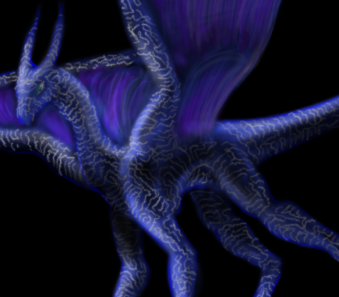
 While [[xtauh:|xtauh]] don't really like being too bottled up together, it remains a fact that there are going to be places where they live in closer proximity than others. There are lots of reasons for this. Is there a place where there's more food or other resources than in the surrounding areas? A defensible place that's safe from enemies? A convenient site for trade? A place of religious or mythological significance? People are going to want to live there - and it's hard to stop them, unless there are enough people already there to keep them out. While [[xtauh:|xtauh]] don't really like being too bottled up together, it remains a fact that there are going to be places where they live in closer proximity than others. There are lots of reasons for this. Is there a place where there's more food or other resources than in the surrounding areas? A defensible place that's safe from enemies? A convenient site for trade? A place of religious or mythological significance? People are going to want to live there - and it's hard to stop them, unless there are enough people already there to keep them out.
  
-In the case of [[avishraa:community:poradrin:|Poradrin]], both trade and defensibility were considerations, being centered in the narrow crook of a river fork in the northern grasslands. Its position allows it to derive its livelihood from traffic moving to, on, or along the river, and meanwhile, walled off on the landward side and accessible from the water only by ferry, it is difficult either to attack or to besiege from the ground. (While xtauh and [[takma:|takmar]] can fly, they are sharply limited in what they can carry while doing so; they can be only lightly armed, and flying units function best as skirmishers, saboteurs, and scouts rather than as frontline attackers, unless deployed en masse. The development of firearms, when it occurs, will likely change this.)+In the case of [[geopolitical:poradrin:|Poradrin]], both trade and defensibility were considerations, being centered in the narrow crook of a river fork in the northern grasslands. Its position allows it to derive its livelihood from traffic moving to, on, or along the river, and meanwhile, walled off on the landward side and accessible from the water only by ferry, it is difficult either to attack or to besiege from the ground. (While xtauh and [[takma:|takmar]] can fly, they are sharply limited in what they can carry while doing so; they can be only lightly armed, and flying units function best as skirmishers, saboteurs, and scouts rather than as frontline attackers, unless deployed en masse. The development of firearms, when it occurs, will likely change this.)
  
 While I call Poradrin a city-state, which is the closest human equivalent, it's probably more accurate to call it a kind of mutual defense treaty, with - at its core - a more tightly-knit confederation of autonomous neighborhoods. The xtauh city-states of the northern grasslands are keen rivals, and independent bandits are certainly not unknown either; while wars of destruction or conquest are rare, attacks and raids are quite common, with the intention of carrying off loot or intimidating victims into changing allegiance. This is what defines Poradrin's hegemony; those homesteads entered into a pact with it do so knowing that, however vulnerable they might be alone or in small groups, the numerous inhabitants of the city are only a short distance away. (For this reason, the city-state's borders tend to be determined by whether a different city-state can send relief forces more quickly.) Poradrin is also where the outlying hamlets sell their food; in return, Poradrin has a market for more specialist manufactured goods, and a buffer against its enemies. While I call Poradrin a city-state, which is the closest human equivalent, it's probably more accurate to call it a kind of mutual defense treaty, with - at its core - a more tightly-knit confederation of autonomous neighborhoods. The xtauh city-states of the northern grasslands are keen rivals, and independent bandits are certainly not unknown either; while wars of destruction or conquest are rare, attacks and raids are quite common, with the intention of carrying off loot or intimidating victims into changing allegiance. This is what defines Poradrin's hegemony; those homesteads entered into a pact with it do so knowing that, however vulnerable they might be alone or in small groups, the numerous inhabitants of the city are only a short distance away. (For this reason, the city-state's borders tend to be determined by whether a different city-state can send relief forces more quickly.) Poradrin is also where the outlying hamlets sell their food; in return, Poradrin has a market for more specialist manufactured goods, and a buffer against its enemies.
  
-Suppose, then, that you were traveling toward Poradrin from the grasslands, and entered the outskirts of the city-state. The first signs of civilization to be seen would be boundary-markers at the edges of their properties, often just wooden posts with symbols on them. (Most xtauh property-owners are female, and, where land becomes densely settled, take [[takma:behaviors#Territoriality|great psychological comfort]] from having their land be physically demarcated.) The homes this far out are often not well protected; an isolated family may not be able to spare the labor needed to build more than a fence around the core its homestead, and would in any case be easily outnumbered by any attacking force. Here, the aid of Poradrin is mostly in recovery and reprisal, though other families may be close enough to help chase off small raiding parties.+Suppose, then, that you were traveling toward Poradrin from the grasslands, and entered the outskirts of the city-state. The first signs of civilization to be seen would be boundary-markers at the edges of their properties, often just wooden posts with symbols on them. (Most xtauh property-owners are female, and, where land becomes densely settled, take [[takma:behaviors#territoriality|great psychological comfort]] from having their land be physically demarcated.) The homes this far out are often not well protected; an isolated family may not be able to spare the labor needed to build more than a fence around the core its homestead, and would in any case be easily outnumbered by any attacking force. Here, the aid of Poradrin is mostly in recovery and reprisal, though other families may be close enough to help chase off small raiding parties.
  
 This far from the river, the road may take some time to become more than a footpath across someone's land. It is important, during this part of the journey, to be obvious in one's intentions; travel the path forthrightly, without appearing to be sneaking and without straying from it. If challenged by the property's inhabitants, answer truthfully that you are only progressing along the path to another destination. (A visible lack of weapons, while reassuring to the inhabitants, is generally not expected, as unarmed parties are too vulnerable.) A polite and well-behaved party will usually be invited to stop and rest, if need be, and to drink from such water sources as are available, but the provision of food depends on the inhabitants' needs; this extends to the taking of food from the land, which if done without permission is considered poaching or theft. This far from the river, the road may take some time to become more than a footpath across someone's land. It is important, during this part of the journey, to be obvious in one's intentions; travel the path forthrightly, without appearing to be sneaking and without straying from it. If challenged by the property's inhabitants, answer truthfully that you are only progressing along the path to another destination. (A visible lack of weapons, while reassuring to the inhabitants, is generally not expected, as unarmed parties are too vulnerable.) A polite and well-behaved party will usually be invited to stop and rest, if need be, and to drink from such water sources as are available, but the provision of food depends on the inhabitants' needs; this extends to the taking of food from the land, which if done without permission is considered poaching or theft.
tirades/2019-06-14.1592689655.txt.gz · Last modified: (external edit)