User Tools

Site Tools


takma:start

Differences

This shows you the differences between two versions of the page.

Link to this comparison view

Both sides previous revisionPrevious revision
Next revision
Previous revision
takma:start [2023/11/22 10:01] – ↷ Links adapted because of a move operation shyriathtakma:start [2024/01/25 10:04] (current) shyriath
Line 1: Line 1:
 ====== Takmar ====== ====== Takmar ======
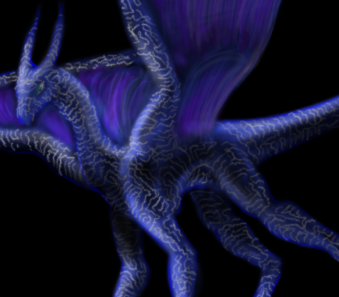
-The species known as the **takmar** in [[language:imperial:start|Imperial]] (plural; singular //takma//) are a species of intelligent dragon that are the most numerous [[species:start#Enenkalar|sapients]] on [[Avishraa:]] and the creators of its most advanced civilizations. As with humans, this gives them no great claim to moral superiority - takmar are as prone to stupidity, hatred, greed, and violence as they are to kindness, love, charity or art. But they are not evil, though individuals may be, and although their standard of living is what one might expect from a medieval society, many of them nonetheless live lives that, by their own standard, are good enough, if imperfect.+The species known as the **takmar** in [[language:imperial:start|Imperial]] (plural; singular //takma//) are a species of intelligent dragon that are the most numerous [[species:start#Enenkalar|sapients]] on [[universe:mikurmiya:avishraa]] and the creators of its most advanced civilizations. As with humans, this gives them no great claim to moral superiority - takmar are as prone to stupidity, hatred, greed, and violence as they are to kindness, love, charity or art. But they are not evil, though individuals may be, and although their standard of living is what one might expect from a medieval society, many of them nonetheless live lives that, by their own standard, are good enough, if imperfect.
  
 ===== Numerical characteristics ===== ===== Numerical characteristics =====
Line 37: Line 37:
 ===== Taxonomy and evolution ===== ===== Taxonomy and evolution =====
 ==== Ancestry and relatives ==== ==== Ancestry and relatives ====
-The closest living relatives of the takmar are a species referred to in [[avishraa:geography:sekhaa:region:brightness]] [[language:imperial:start]] as the [[xtauh:]], from whom they began to diverge some eighteen thousand cycles ago. Though neither of them recognize the relationship, they remain genetically compatible enough that interbreeding is occasionally possible, though extremely risky. These two species are together classified as the [[species:clade:takmin|takmins]].+The closest living relatives of the takmar are a species referred to in [[geography:sekhaa:region:brightness]] [[language:imperial:start]] as the [[xtauh:]], from whom they began to diverge some eighteen thousand cycles ago. Though neither of them recognize the relationship, they remain genetically compatible enough that interbreeding is occasionally possible, though extremely risky. These two species are together classified as the [[species:clade:takmin|takmins]].
  
-The ancestors of the takmins diverged some 74 thousand cycles ago from those of the [[species:clade:dvidalin|dvidalins]], a mostly bipedal clade. The third known sapient species, the [[orghysh:]], are dvidalins, though there are also a number of non-sapient dvidalins scattered throughout [[avishraa:geography:sekhaa:start]]; the arboreal [[species:sikirin]] are among those most well-known to takmar of the [[avishraa:geography:cerulean_tangle|Tangle]].+The ancestors of the takmins diverged some 74 thousand cycles ago from those of the [[species:clade:dvidalin|dvidalins]], a mostly bipedal clade. The third known sapient species, the [[orghysh:]], are dvidalins, though there are also a number of non-sapient dvidalins scattered throughout [[geography:sekhaa:start]]; the arboreal [[species:sikirin]] are among those most well-known to takmar of the [[geography:sekhaa:region:cerulean_tangle|Tangle]].
  
 ==== Variations ==== ==== Variations ====
Line 51: Line 51:
   * //Highland:// Smaller and lighter than lowland takmar. They have shorter, blunter muzzles and wider heads and chests, and a generally bulkier appearance than lowland takmar. They have a higher proportion of colors in the brown-red-yellow spectrum. They are the dominant race in the highlands on either side of the Spine of Sirdanth.    * //Highland:// Smaller and lighter than lowland takmar. They have shorter, blunter muzzles and wider heads and chests, and a generally bulkier appearance than lowland takmar. They have a higher proportion of colors in the brown-red-yellow spectrum. They are the dominant race in the highlands on either side of the Spine of Sirdanth. 
  
-As with human races, the boundaries between them are not distinct and there are many areas where considerable mixture has occurred. This is especially true with takma settlements in the [[avishraa:geography:sekhaa:region:brightness]], whose founding colonists tended to be an even mix of riparian and highland takmar whose descendants are a fairly thorough blend of both.+As with human races, the boundaries between them are not distinct and there are many areas where considerable mixture has occurred. This is especially true with takma settlements in the [[geography:sekhaa:region:brightness]], whose founding colonists tended to be an even mix of riparian and highland takmar whose descendants are a fairly thorough blend of both.
  
 There is also a fourth group, whose biological status is somewhat unusual - it is clearly heritable and clearly has physical markers, but since members of the group also inherit racial characteristics independently of this, its identity as a race is debatable. This group is variously called the [[chosen:|Chosen]], or - less charitably - 'witches', and is distinguished from other takmar by far smaller size, far longer lifespan, and by the possession of innate magic. Their specific traits are addressed in their article. There is also a fourth group, whose biological status is somewhat unusual - it is clearly heritable and clearly has physical markers, but since members of the group also inherit racial characteristics independently of this, its identity as a race is debatable. This group is variously called the [[chosen:|Chosen]], or - less charitably - 'witches', and is distinguished from other takmar by far smaller size, far longer lifespan, and by the possession of innate magic. Their specific traits are addressed in their article.
Line 80: Line 80:
  
 ===== Ecology and habitats ===== ===== Ecology and habitats =====
-Takmar are for the most part restricted to the continent of [[avishraa:geography:sekhaa:start]]. Despite their affinity for water, they [[takma:behaviors#thalassophobia|fear being on or in water that is too deep or too far from land]], and although some cultures have overcome this to engage in seagoing travel, it is only in recent cycles that these cultures have begun to discover [[avishraa:geography:enarri|other]] [[avishraa:geography:talmat|continents]].+Takmar are for the most part restricted to the continent of [[geography:sekhaa:start]]. Despite their affinity for water, they [[takma:behaviors#thalassophobia|fear being on or in water that is too deep or too far from land]], and although some cultures have overcome this to engage in seagoing travel, it is only in recent cycles that these cultures have begun to discover [[geography:enarri:|other]] [[geography:talmat:|continents]].
  
 Takmar are not, biologically speaking, as adaptable to climate as humans are. They require an overall warmer temperature range, and are most comfortable around 25 to 35 degrees C; they also require far more moisture, and need to remain in an environment that has either high humidity or sizable bodies of water available to immerse in. This means that their highest population densities are found amid tropical rainforests, marshes, and swamps. Being a sapient species, technology has allowed the range of the species to be extended into colder climes: fire, fur clothes, and well-insulated housing all contribute to survival. That said, very few takmar dare to live in climates much colder than those considered temperate on Earth. Takmar are not, biologically speaking, as adaptable to climate as humans are. They require an overall warmer temperature range, and are most comfortable around 25 to 35 degrees C; they also require far more moisture, and need to remain in an environment that has either high humidity or sizable bodies of water available to immerse in. This means that their highest population densities are found amid tropical rainforests, marshes, and swamps. Being a sapient species, technology has allowed the range of the species to be extended into colder climes: fire, fur clothes, and well-insulated housing all contribute to survival. That said, very few takmar dare to live in climates much colder than those considered temperate on Earth.
  
-As for water itself, takma settlement in arid climates, such as the desert known as the [[avishraa:geography:sekhaa:region:brightness]], clings to rivers and oases; if large amounts of water cannot at least be transported constantly and reliably to a location, they cannot live there for more than a short time. Therefore, takma settlement depends strongly on either the presence of sufficient quantities of both bathing and drinking water or the ability to accumulate them, which in less rainy environments than they are used to can restrict them to living near riverbanks and shorelines. Traveling between these habitable areas involves either firm control of oases or the establishment and supply of artificial watering holes (or both), usually at significant expense.+As for water itself, takma settlement in arid climates, such as the desert known as the [[geography:sekhaa:region:brightness]], clings to rivers and oases; if large amounts of water cannot at least be transported constantly and reliably to a location, they cannot live there for more than a short time. Therefore, takma settlement depends strongly on either the presence of sufficient quantities of both bathing and drinking water or the ability to accumulate them, which in less rainy environments than they are used to can restrict them to living near riverbanks and shorelines. Traveling between these habitable areas involves either firm control of oases or the establishment and supply of artificial watering holes (or both), usually at significant expense.
  
 Lately, the development of [[concept:glyphic teleportation]] has allowed the colonization of other worlds, though so far this has only been done on an individual basis; no significant takma populations have been established off of Avishraa. Lately, the development of [[concept:glyphic teleportation]] has allowed the colonization of other worlds, though so far this has only been done on an individual basis; no significant takma populations have been established off of Avishraa.
takma/start.1700665308.txt.gz · Last modified: by shyriath