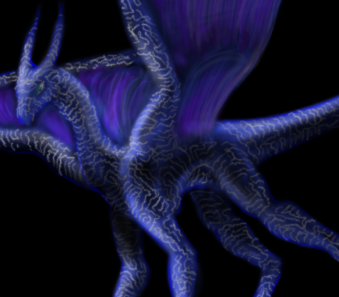
takma:start
Differences
This shows you the differences between two versions of the page.
| Both sides previous revisionPrevious revisionNext revision | Previous revision | ||
| takma:start [2021/05/09 11:09] – shyriath | takma:start [2024/01/25 10:04] (current) – shyriath | ||
|---|---|---|---|
| Line 1: | Line 1: | ||
| ====== Takmar ====== | ====== Takmar ====== | ||
| - | The species known as the **takmar** in [[language: | + | The species known as the **takmar** in [[language: |
| ===== Numerical characteristics ===== | ===== Numerical characteristics ===== | ||
| Line 37: | Line 37: | ||
| ===== Taxonomy and evolution ===== | ===== Taxonomy and evolution ===== | ||
| ==== Ancestry and relatives ==== | ==== Ancestry and relatives ==== | ||
| - | The closest living relatives of the takmar are a species referred to in [[avishraa:place:Brightness]] [[language:Imperial]] as the [[xtauh:]], from whom they began to diverge some eighteen thousand cycles ago. Though neither of them recognize the relationship, | + | The closest living relatives of the takmar are a species referred to in [[geography:sekhaa:region: |
| - | The ancestors of the takmins diverged some 74 thousand cycles ago from those of the [[species: | + | The ancestors of the takmins diverged some 74 thousand cycles ago from those of the [[species: |
| ==== Variations ==== | ==== Variations ==== | ||
| Line 51: | Line 51: | ||
| * // | * // | ||
| - | As with human races, the boundaries between them are not distinct and there are many areas where considerable mixture has occurred. This is especially true with takma settlements in the [[avishraa:place:Brightness]], whose founding colonists tended to be an even mix of riparian and highland takmar whose descendants are a fairly thorough blend of both. | + | As with human races, the boundaries between them are not distinct and there are many areas where considerable mixture has occurred. This is especially true with takma settlements in the [[geography:sekhaa:region: |
| There is also a fourth group, whose biological status is somewhat unusual - it is clearly heritable and clearly has physical markers, but since members of the group also inherit racial characteristics independently of this, its identity as a race is debatable. This group is variously called the [[chosen: | There is also a fourth group, whose biological status is somewhat unusual - it is clearly heritable and clearly has physical markers, but since members of the group also inherit racial characteristics independently of this, its identity as a race is debatable. This group is variously called the [[chosen: | ||
| Line 80: | Line 80: | ||
| ===== Ecology and habitats ===== | ===== Ecology and habitats ===== | ||
| - | Takmar are for the most part restricted to the continent of [[avishraa:place:Sekhaa]]. Despite their affinity for water, they [[takma: | + | Takmar are for the most part restricted to the continent of [[geography:sekhaa:start]]. Despite their affinity for water, they [[takma: |
| Takmar are not, biologically speaking, as adaptable to climate as humans are. They require an overall warmer temperature range, and are most comfortable around 25 to 35 degrees C; they also require far more moisture, and need to remain in an environment that has either high humidity or sizable bodies of water available to immerse in. This means that their highest population densities are found amid tropical rainforests, | Takmar are not, biologically speaking, as adaptable to climate as humans are. They require an overall warmer temperature range, and are most comfortable around 25 to 35 degrees C; they also require far more moisture, and need to remain in an environment that has either high humidity or sizable bodies of water available to immerse in. This means that their highest population densities are found amid tropical rainforests, | ||
| - | As for water itself, takma settlement in arid climates, such as the desert known as the [[avishraa:place:Brightness]], clings to rivers and oases; if large amounts of water cannot at least be transported constantly and reliably to a location, they cannot live there for more than a short time. Therefore, takma settlement depends strongly on either the presence of sufficient quantities of both bathing and drinking water or the ability to accumulate them, which in less rainy environments than they are used to can restrict them to living near riverbanks and shorelines. Traveling between these habitable areas involves either firm control of oases or the establishment and supply of artificial watering holes (or both), usually at significant expense. | + | As for water itself, takma settlement in arid climates, such as the desert known as the [[geography:sekhaa:region: |
| Lately, the development of [[concept: | Lately, the development of [[concept: | ||
| Line 145: | Line 145: | ||
| ==== Taboos ==== | ==== Taboos ==== | ||
| === Public empathy === | === Public empathy === | ||
| - | Nearly every takma culture requires its members to [[View | + | Nearly every takma culture requires its members to [[takma: |
| - | takma: | + | |
| === Paternity === | === Paternity === | ||
| Line 165: | Line 164: | ||
| The attitude of most takmar toward other sapient species tends to vary between dismissive and genocidal. The most numerous and technologically advanced species on Avishraa, takmar have relatively little reason to feel impressed by either the [[xtauh: | The attitude of most takmar toward other sapient species tends to vary between dismissive and genocidal. The most numerous and technologically advanced species on Avishraa, takmar have relatively little reason to feel impressed by either the [[xtauh: | ||
| - | |||
| - | * takma: | ||
| - | * takma: | ||
| - | * takma: | ||
| - | * takma: | ||
| - | * takma: | ||
| - | * takma: | ||
| - | * takma: | ||
| - | * takma: | ||
| - | * takma: | ||
| - | * takma: | ||
| {{tag> | {{tag> | ||
takma/start.1620572961.txt.gz · Last modified: (external edit)