takma:start
Differences
This shows you the differences between two versions of the page.
| Both sides previous revisionPrevious revisionNext revision | Previous revision | ||
| takma:start [2021/05/07 11:05] – ↷ Links adapted because of a move operation shyriath | takma:start [2024/01/25 10:04] (current) – shyriath | ||
|---|---|---|---|
| Line 1: | Line 1: | ||
| - | The species known as the **takmar** in [[language: | + | ====== Takmar ====== |
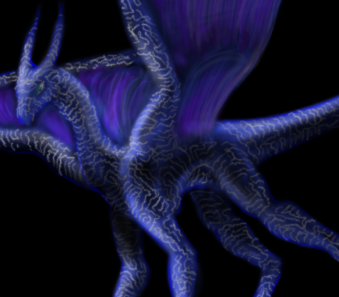
| + | The species known as the **takmar** in [[language: | ||
| ===== Numerical characteristics ===== | ===== Numerical characteristics ===== | ||
| Line 10: | Line 11: | ||
| ===== Anatomy and physiology ===== | ===== Anatomy and physiology ===== | ||
| ==== Shape and features ==== | ==== Shape and features ==== | ||
| - | //See also the articles on the [[takma: | + | //See also the articles on the [[takma: |
| - | Takmar are large [[species: | + | Takmar are large [[species: |
| The head is of a more or less aerodynamic shape with a long muzzle. The teeth are generally conical, although those toward the rear of the mouth have truncated, almost flattened, points. The nostrils can seal while underwater. The eyes have catlike, slitted pupils, and are usually light in color, typically some shade of blue, gray, or washed-out green. Other colors, such as gold, are possible. Takmar do not have ears, but instead a pair of antennae; long, flexible, backwards-sweeping structures with hollow interiors. The set of the eyes and antennae, and to a lesser extent the mouth, play a major role in takma facial expressions. | The head is of a more or less aerodynamic shape with a long muzzle. The teeth are generally conical, although those toward the rear of the mouth have truncated, almost flattened, points. The nostrils can seal while underwater. The eyes have catlike, slitted pupils, and are usually light in color, typically some shade of blue, gray, or washed-out green. Other colors, such as gold, are possible. Takmar do not have ears, but instead a pair of antennae; long, flexible, backwards-sweeping structures with hollow interiors. The set of the eyes and antennae, and to a lesser extent the mouth, play a major role in takma facial expressions. | ||
| ==== Motion and locomotion ==== | ==== Motion and locomotion ==== | ||
| - | //See also [[takma:body_language|Body language]].// | + | //See also [[takma: |
| Takmar are capable of either a bipedal or quadrupedal gait on land. The latter, which involves curling the fingers and placing the weight on the knuckles, is more comfortable for both standing and walking/ | Takmar are capable of either a bipedal or quadrupedal gait on land. The latter, which involves curling the fingers and placing the weight on the knuckles, is more comfortable for both standing and walking/ | ||
| Line 23: | Line 24: | ||
| The takma neck is only slightly longer, proportionally speaking, than a human neck. It is more flexible, but far more so toward the chest and the sides than toward the back; when quadrupedal, | The takma neck is only slightly longer, proportionally speaking, than a human neck. It is more flexible, but far more so toward the chest and the sides than toward the back; when quadrupedal, | ||
| - | Takmar frequently have trouble reaching their own backs. The neck is not long or flexible enough to twist the mouth around to reach, nor can the forelimbs rotate backward far enough to reach anything but the far upper and lower back. The wing-thumb can be use to clumsily scratch the upper back, but this is frequently not considered satisfying; the tail is prehensile, but has relatively poor motor control. [[takma: | + | Takmar frequently have trouble reaching their own backs. The neck is not long or flexible enough to twist the mouth around to reach, nor can the forelimbs rotate backward far enough to reach anything but the far upper and lower back. The wing-thumb can be use to clumsily scratch the upper back, but this is frequently not considered satisfying; the tail is prehensile, but has relatively poor motor control. [[takma: |
| In Avishraan gravity, which is slightly over 86% that of Earth' | In Avishraan gravity, which is slightly over 86% that of Earth' | ||
| ==== Senses and perception ==== | ==== Senses and perception ==== | ||
| - | //See also [[takma:senses|Senses]].// | + | //See also [[takma: |
| The takma senses are broadly comparable to those of humans, at least to the extent that they would be able to detect many of the same stimuli. That said, their visual and auditory ranges are not identical, and the takma sense of small is somewhat poorer. | The takma senses are broadly comparable to those of humans, at least to the extent that they would be able to detect many of the same stimuli. That said, their visual and auditory ranges are not identical, and the takma sense of small is somewhat poorer. | ||
| Line 36: | Line 37: | ||
| ===== Taxonomy and evolution ===== | ===== Taxonomy and evolution ===== | ||
| ==== Ancestry and relatives ==== | ==== Ancestry and relatives ==== | ||
| - | The closest living relatives of the takmar are a species referred to in [[avishraa:place:brightness|Brightness]] [[language: | + | The closest living relatives of the takmar are a species referred to in [[geography:sekhaa: |
| - | The ancestors of the takmins diverged some 74 thousand cycles ago from those of the [[species: | + | The ancestors of the takmins diverged some 74 thousand cycles ago from those of the [[species: |
| ==== Variations ==== | ==== Variations ==== | ||
| - | Takmar have a much higher variability in skin color than humans do, even within the same population, and it is relatively common for children to be a different color from either parent (see [[takma:scales_and_coloration|Scales and coloration]] for details). The physical races that make up the takma species, therefore, tend to be defined based on other factors, though some colors are more common for some than for others. | + | Takmar have a much higher variability in skin color than humans do, even within the same population, and it is relatively common for children to be a different color from either parent (see [[takma: |
| There are, broadly speaking, three major racial types. The first two, which can be grouped together as the lowland races, are more closely related to each other than to the highland race. | There are, broadly speaking, three major racial types. The first two, which can be grouped together as the lowland races, are more closely related to each other than to the highland race. | ||
| Line 50: | Line 51: | ||
| * // | * // | ||
| - | As with human races, the boundaries between them are not distinct and there are many areas where considerable mixture has occurred. This is especially true with takma settlements in the [[avishraa:place:brightness|Brightness]], whose founding colonists tended to be an even mix of riparian and highland takmar whose descendants are a fairly thorough blend of both. | + | As with human races, the boundaries between them are not distinct and there are many areas where considerable mixture has occurred. This is especially true with takma settlements in the [[geography:sekhaa: |
| There is also a fourth group, whose biological status is somewhat unusual - it is clearly heritable and clearly has physical markers, but since members of the group also inherit racial characteristics independently of this, its identity as a race is debatable. This group is variously called the [[chosen: | There is also a fourth group, whose biological status is somewhat unusual - it is clearly heritable and clearly has physical markers, but since members of the group also inherit racial characteristics independently of this, its identity as a race is debatable. This group is variously called the [[chosen: | ||
| Line 56: | Line 57: | ||
| ===== Biology ===== | ===== Biology ===== | ||
| ==== Genetics and reproduction ==== | ==== Genetics and reproduction ==== | ||
| - | //See also [[takma:reproduction|Reproduction]].// | + | //See also [[takma: |
| In terms of sexual behavior, neither males nor females are much inclined toward monogamy. Socially, however, most takma societies are [[https:// | In terms of sexual behavior, neither males nor females are much inclined toward monogamy. Socially, however, most takma societies are [[https:// | ||
| Line 67: | Line 68: | ||
| ==== Life expectancy ==== | ==== Life expectancy ==== | ||
| - | A takma is considered extremely lucky to live to half a hexatrigesimal - 18 cycles (97 Earth years). While this is certainly possible with a good diet and medical care, it should be noted that most takmar do not get much of the latter and many of them get neither, and so it is no surprise that a more reasonable life expectancy is more like 11 or 12 cycles (60-65 years) even for the fortunate. The main exception to this is the case of the [[chosen: | + | A takma is considered extremely lucky to live to half a hexatrigesimal - 18 cycles (97 Earth years). While this is certainly possible with a good diet and medical care, it should be noted that most takmar do not get much of the latter and many of them get neither, and so it is no surprise that a more reasonable life expectancy is more like 11 or 12 cycles (60-65 years) even for the fortunate. The main exception to this is the case of the [[chosen: |
| Life expectancy generally increases or decreases with prosperity, although the relationship is somewhat less linear to status and gender; middle-ranking females almost always live longer than males of the same class, but both lower- and higher-ranking females tend to live only as long, or slightly less than, males of the same status. This is related to reproductive and social stress at both ends of the spectrum: lower-status females have to cope with the demands of superiors and must often care for families in situations with little spare food and no medical care; higher-status females must strive to prevent their relative status from sinking below that of rivals, and are under high pressure to bear children. | Life expectancy generally increases or decreases with prosperity, although the relationship is somewhat less linear to status and gender; middle-ranking females almost always live longer than males of the same class, but both lower- and higher-ranking females tend to live only as long, or slightly less than, males of the same status. This is related to reproductive and social stress at both ends of the spectrum: lower-status females have to cope with the demands of superiors and must often care for families in situations with little spare food and no medical care; higher-status females must strive to prevent their relative status from sinking below that of rivals, and are under high pressure to bear children. | ||
| ==== Cyclicity ==== | ==== Cyclicity ==== | ||
| - | Takmar have the ability to engage in [[https:// | + | Takmar have the ability to engage in [[https:// |
| - | Because the equivalent of a full day on Avishraa, the [[concept: | + | Because the equivalent of a full day on Avishraa, the [[concept: |
| Takmar tend to be most active, and most likely to have both halves of the brain awake, during daylight hours, but also more likely to engage in full-brain sleep. The particular times at which sleep is more likely varies and is determined by poorly-understood factors, but it is natural for different segments of takma societies to fall fully asleep in roughly synchronized " | Takmar tend to be most active, and most likely to have both halves of the brain awake, during daylight hours, but also more likely to engage in full-brain sleep. The particular times at which sleep is more likely varies and is determined by poorly-understood factors, but it is natural for different segments of takma societies to fall fully asleep in roughly synchronized " | ||
| ===== Ecology and habitats ===== | ===== Ecology and habitats ===== | ||
| - | Takmar are for the most part restricted to the continent of [[avishraa:place:sekhaa|Sekhaa]]. Despite their affinity for water, they [[takma: | + | Takmar are for the most part restricted to the continent of [[geography:sekhaa:start]]. Despite their affinity for water, they [[takma: |
| Takmar are not, biologically speaking, as adaptable to climate as humans are. They require an overall warmer temperature range, and are most comfortable around 25 to 35 degrees C; they also require far more moisture, and need to remain in an environment that has either high humidity or sizable bodies of water available to immerse in. This means that their highest population densities are found amid tropical rainforests, | Takmar are not, biologically speaking, as adaptable to climate as humans are. They require an overall warmer temperature range, and are most comfortable around 25 to 35 degrees C; they also require far more moisture, and need to remain in an environment that has either high humidity or sizable bodies of water available to immerse in. This means that their highest population densities are found amid tropical rainforests, | ||
| - | As for water itself, takma settlement in arid climates, such as the desert known as the [[avishraa:place:brightness|Brightness]], clings to rivers and oases; if large amounts of water cannot at least be transported constantly and reliably to a location, they cannot live there for more than a short time. Therefore, takma settlement depends strongly on either the presence of sufficient quantities of both bathing and drinking water or the ability to accumulate them, which in less rainy environments than they are used to can restrict them to living near riverbanks and shorelines. Traveling between these habitable areas involves either firm control of oases or the establishment and supply of artificial watering holes (or both), usually at significant expense. | + | As for water itself, takma settlement in arid climates, such as the desert known as the [[geography:sekhaa: |
| - | Lately, the development of [[concept:glyphic_teleportation|glyphic teleportation]] has allowed the colonization of other worlds, though so far this has only been done on an individual basis; no significant takma populations have been established off of Avishraa. | + | Lately, the development of [[concept: |
| ==== Population ecology ==== | ==== Population ecology ==== | ||
| Line 93: | Line 94: | ||
| ==== Dietary needs and habits ==== | ==== Dietary needs and habits ==== | ||
| - | //See also [[takma:diet_and_agriculture|Diet and agriculture]].// | + | //See also [[takma: |
| Takmar have a strong preference for the taste of meat and other savory foods, and they cannot process plant foods with large amounts of cellulose, such as leaves and stems. That said, they are [[https:// | Takmar have a strong preference for the taste of meat and other savory foods, and they cannot process plant foods with large amounts of cellulose, such as leaves and stems. That said, they are [[https:// | ||
| Line 107: | Line 108: | ||
| ===== Behaviors ===== | ===== Behaviors ===== | ||
| - | //See also [[takma:behaviors|Behaviors]].// | + | //See also [[takma: |
| While takmar, like humans, have a wide variety of practices based in culture and religion, there are many that rest ultimately in the sociobiology of the species. The possession of the empathic sense, prehistoric territorial instincts and reproductive strategies - factors like these continue to have effects on present-day societies. | While takmar, like humans, have a wide variety of practices based in culture and religion, there are many that rest ultimately in the sociobiology of the species. The possession of the empathic sense, prehistoric territorial instincts and reproductive strategies - factors like these continue to have effects on present-day societies. | ||
| Line 144: | Line 145: | ||
| ==== Taboos ==== | ==== Taboos ==== | ||
| === Public empathy === | === Public empathy === | ||
| - | Nearly every takma culture requires its members to [[View | + | Nearly every takma culture requires its members to [[takma: |
| - | takma: | + | |
| === Paternity === | === Paternity === | ||
| Line 161: | Line 161: | ||
| ===== Relations with other species ===== | ===== Relations with other species ===== | ||
| - | //See also [[takma:relations|Relations]].// | + | //See also [[takma: |
| The attitude of most takmar toward other sapient species tends to vary between dismissive and genocidal. The most numerous and technologically advanced species on Avishraa, takmar have relatively little reason to feel impressed by either the [[xtauh: | The attitude of most takmar toward other sapient species tends to vary between dismissive and genocidal. The most numerous and technologically advanced species on Avishraa, takmar have relatively little reason to feel impressed by either the [[xtauh: | ||
| - | |||
| - | * takma: | ||
| - | * takma: | ||
| - | * takma: | ||
| - | * takma: | ||
| - | * takma: | ||
| - | * takma: | ||
| - | * takma: | ||
| - | * takma: | ||
| - | * takma: | ||
| - | * takma: | ||
| {{tag> | {{tag> | ||
takma/start.1620399941.txt.gz · Last modified: (external edit)