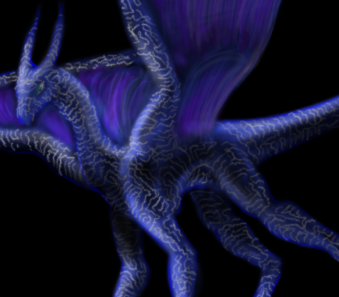
takma:scales_and_coloration
Differences
This shows you the differences between two versions of the page.
| Both sides previous revisionPrevious revisionNext revision | Previous revision | ||
| takma:scales_and_coloration [2021/05/07 11:05] – ↷ Page name changed from takma:scales-and-coloration to takma:scales_and_coloration shyriath | takma:scales_and_coloration [2024/01/25 09:43] (current) – ↷ Links adapted because of a move operation shyriath | ||
|---|---|---|---|
| Line 1: | Line 1: | ||
| - | The external, visible portion of [[takma:|takma]] skin consists of two layers. Beneath is the relatively soft and vulnerable epidermis, the equivalent of human skin, but over most of the body the epidermis is protected by a layer of keratinous [[#scales|scales]]. The scales act as a barrier to infection, as armor for the body, and combined with the epidermis play a role in a takma’s [[# | + | ====== Takma scales and coloration ====== |
| + | The external, visible portion of [[takma:]] skin consists of two layers. Beneath is the relatively soft and vulnerable epidermis, the equivalent of human skin, but over most of the body the epidermis is protected by a layer of keratinous [[# | ||
| ===== Epidermis ===== | ===== Epidermis ===== | ||
| Line 31: | Line 32: | ||
| Out of the three scale types, massive scales are the most resistant to damage from sharp objects. They are relatively difficult to puncture, scrape, or abrade. On the other hand, they are less protection from blunt force, being more apt than spongiform scales to transfer shock through to the underlying tissue. The scales themselves have a critical failure point, as well; rather than compressing under severe force, they tend to crack instead, which even in the absence of direct injury to the underlying epidermis can be painful. | Out of the three scale types, massive scales are the most resistant to damage from sharp objects. They are relatively difficult to puncture, scrape, or abrade. On the other hand, they are less protection from blunt force, being more apt than spongiform scales to transfer shock through to the underlying tissue. The scales themselves have a critical failure point, as well; rather than compressing under severe force, they tend to crack instead, which even in the absence of direct injury to the underlying epidermis can be painful. | ||
| - | Massive scales are something of a throwback to the early evolutionary history of the takmar. The common ancestors of the takmar and the [[xtauh:|xtauh]], like the xtauh themselves, were desert dwellers, and their scales are believed to have been primarily of this type. They are relatively impermeable to water, making it easier to retain it but harder to lose it, particularly in the humid conditions of the takma homeland. Although all takmar have other adaptations to aid them in removing excess water from the body, individuals with massive scales may drink slightly less and have a stronger preference for less humid conditions; they are also somewhat more comfortable in arid climates such as those of the [[avishraa:place:brightness|Brightness]]. | + | Massive scales are something of a throwback to the early evolutionary history of the takmar. The common ancestors of the takmar and the [[xtauh:]], like the xtauh themselves, were desert dwellers, and their scales are believed to have been primarily of this type. They are relatively impermeable to water, making it easier to retain it but harder to lose it, particularly in the humid conditions of the takma homeland. Although all takmar have other adaptations to aid them in removing excess water from the body, individuals with massive scales may drink slightly less and have a stronger preference for less humid conditions; they are also somewhat more comfortable in arid climates such as those of the [[geography: |
| Individuals with massive scales tend to have a reputation for toughness, ruggedness, and a straightforward and undemonstrative attitude; they may also be seen as crude, primal, and somewhat irritable. Though they bear a stronger resemblance to the xtauh than other types of takmar, the comparison is usually unwelcome. | Individuals with massive scales tend to have a reputation for toughness, ruggedness, and a straightforward and undemonstrative attitude; they may also be seen as crude, primal, and somewhat irritable. Though they bear a stronger resemblance to the xtauh than other types of takmar, the comparison is usually unwelcome. | ||
| Line 75: | Line 76: | ||
| ===== Mechanism of coloration ===== | ===== Mechanism of coloration ===== | ||
| - | The perceived color of any given area of a takma’s body depends on characteristics of each component of the skin. The base color is provided by the [[#epidermis |epidermis]], | + | The perceived color of any given area of a takma’s body depends on characteristics of each component of the skin. The base color is provided by the [[# |
| - | The pigmented epidermis may or may not have its perceived color modified by the overlying scales. Although scales contain little or no pigments, their microscopic structure may nonetheless selectively reflect back light in a manner that combines with, and alters, the colors showing through the scales from the underlying skin. This is the case with both [[#spongiform|spongiform]] and [[#stratified|stratified]] scales; the former preferentially scatters light so as to appear blue, and transforms the individual' | + | The pigmented epidermis may or may not have its perceived color modified by the overlying scales. Although scales contain little or no pigments, their microscopic structure may nonetheless selectively reflect back light in a manner that combines with, and alters, the colors showing through the scales from the underlying skin. This is the case with both [[# |
| ===== Distribution ===== | ===== Distribution ===== | ||
takma/scales_and_coloration.1620399941.txt.gz · Last modified: (external edit)