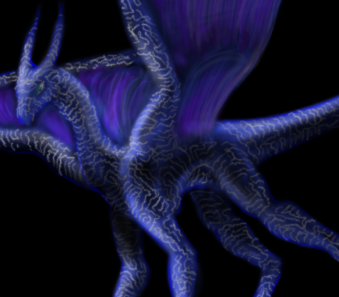
takma:body_language
Differences
This shows you the differences between two versions of the page.
| Both sides previous revisionPrevious revisionNext revision | Previous revision | ||
| takma:body_language [2021/05/07 11:04] – ↷ Page name changed from takma:body-language to takma:body_language shyriath | takma:body_language [2023/11/02 12:00] (current) – shyriath | ||
|---|---|---|---|
| Line 1: | Line 1: | ||
| - | ===== Facial expressions | + | ====== Takma body language ====== |
| + | ===== Bodily movements ===== | ||
| + | ==== Facial expressions ==== | ||
| Like humans, takmar use the movements and set of the face to convey emotional states. (The use of [[concept: | Like humans, takmar use the movements and set of the face to convey emotional states. (The use of [[concept: | ||
| - | Likely the most important conveyors of emotional state are the pair of structures known in Imperial as the // | + | Likely the most important conveyors of emotional state are the pair of structures known in Imperial as the // |
| Having many blood vessels near to the surface, the antennae also play a role in thermoregulation, | Having many blood vessels near to the surface, the antennae also play a role in thermoregulation, | ||
| Line 12: | Line 14: | ||
| (Gallery of facial expressions here) | (Gallery of facial expressions here) | ||
| - | ===== Head ===== | + | ==== Head ==== |
| Movements of the head also play a role in conveying information. While these are usually far more voluntary and subject to cultural variation than facial expressions, | Movements of the head also play a role in conveying information. While these are usually far more voluntary and subject to cultural variation than facial expressions, | ||
| Line 23: | Line 25: | ||
| A forward jabbing motion of the head and muzzle is used as a sign of assertion, almost to the point of aggression. The precise effect it conveys varies depending on the user's expression and words, but generally is used in arguments, disputes, and status interactions to intimidate another or to emphasize one's own position or perception. Combined with bared teeth, snapping of the mouth, and/or an angry expression, it may be the prelude to a violent outburst or attack. | A forward jabbing motion of the head and muzzle is used as a sign of assertion, almost to the point of aggression. The precise effect it conveys varies depending on the user's expression and words, but generally is used in arguments, disputes, and status interactions to intimidate another or to emphasize one's own position or perception. Combined with bared teeth, snapping of the mouth, and/or an angry expression, it may be the prelude to a violent outburst or attack. | ||
| - | ===== Forepaws and forelimbs | + | ==== Forepaws and forelimbs ==== |
| - | ===== Wings ===== | + | ==== Wings ==== |
| The degree to which wings are opened or closed rarely conveys any feelings by itself, but can lend emphasis to other components of body language. | The degree to which wings are opened or closed rarely conveys any feelings by itself, but can lend emphasis to other components of body language. | ||
| Line 37: | Line 39: | ||
| Among the less voluntary gestures, flapping the wings, other than as part of takeoff, is a sign of uncontrolled excitement. Too-frequent adjustments to their positions are seen as a kind of ' | Among the less voluntary gestures, flapping the wings, other than as part of takeoff, is a sign of uncontrolled excitement. Too-frequent adjustments to their positions are seen as a kind of ' | ||
| - | ===== Tail ===== | + | ==== Tail ==== |
| - | ===== Body stance | + | ==== Body stance ==== |
| + | |||
| + | ===== Behaviors ===== | ||
| + | ==== Face licking ==== | ||
| + | The licking of the muzzle and the region around the eyes overlaps somewhat with the forms of licking involved in [[takma: | ||
| + | |||
| + | It is generally interpreted an expression of affection or emotional attachment, whether spontaneous or performative. Formal or perfunctory face lickings tend to involve fewer and alternating licks, whereas expressions of genuine affection tend to involve more licks and more simultaneous licking by both participants. (If simultaneous licking goes on for an extended period - not strictly defined, but the longer it is the more it is held to be true - it is generally considered an expression of romantic feeling, akin to kissing or snogging.) | ||
| + | |||
| + | If one person is licking and the other is not, it is usually assumed that the licking partner is providing comfort and emotional support to the non-licking partner, who may be tired, in distress, or merely distracted. Nonconsensual face licking is rare, since a recipient has few reasons to let it pass unchallenged and a giver has few reasons to force it. | ||
| + | |||
| + | Face licking is not always a positive reaction. The pace of licking is an indication of worry or urgency, and while slow licking indicates a relaxed situation, fast licking may be performed in times of stress for mutual reassurance. Frantic face licking is roughly equivalent, in this sense, to a human clinging to or squeezing another in an embrace. | ||
| {{tag> | {{tag> | ||
takma/body_language.1620399893.txt.gz · Last modified: (external edit)