takma:body
Differences
This shows you the differences between two versions of the page.
| Both sides previous revisionPrevious revisionNext revision | Previous revision | ||
| takma:body [2021/02/06 20:31] – shyriath | takma:body [2023/09/18 15:05] (current) – external edit 127.0.0.1 | ||
|---|---|---|---|
| Line 1: | Line 1: | ||
| + | ====== Takma body ====== | ||
| ===== Parts ===== | ===== Parts ===== | ||
| ==== Face ==== | ==== Face ==== | ||
| Line 17: | Line 18: | ||
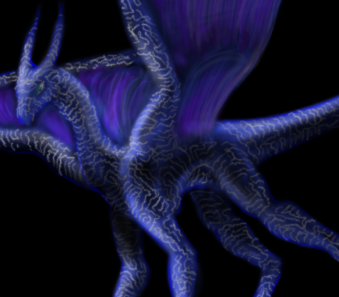
| From these figures it can also be seen that males tend to have a lower mass and greater wingspan relative to their length than females do. This reflects a difference in lifestyle specialization between the sexes, and is part of a collection of related dimorphic traits. Males are typically faster and more agile fliers, and aside from their size and wingspan, have more wiry builds overall but more developed flight muscles in the chest. Partially due to this fact, males have more difficulty with bipedal locomotion, as their center of gravity is further forward in their body and requires more effort to lift. Females, conversely, are weaker fliers; though they are entirely capable of flight, their heavier, more muscular builds do not permit them the same speed or agility as the males in the air. Nonetheless, | From these figures it can also be seen that males tend to have a lower mass and greater wingspan relative to their length than females do. This reflects a difference in lifestyle specialization between the sexes, and is part of a collection of related dimorphic traits. Males are typically faster and more agile fliers, and aside from their size and wingspan, have more wiry builds overall but more developed flight muscles in the chest. Partially due to this fact, males have more difficulty with bipedal locomotion, as their center of gravity is further forward in their body and requires more effort to lift. Females, conversely, are weaker fliers; though they are entirely capable of flight, their heavier, more muscular builds do not permit them the same speed or agility as the males in the air. Nonetheless, | ||
| - | Although males and females have approximately the same possible [[takma:scales-and-coloration|range of possible colors]], their distribution on the body is different, with males tending to have simpler color schemes relying on shading of a single color, with patterns of shade contrast on the dorsal wing surfaces, and females more often having two (or rarely more) different colors, dark stripes on their backs, and a wide variety of possible patterns on their heads, necks, and lower bodies. | + | Although males and females have approximately the same possible [[takma:scales_and_coloration|range of possible colors]], their distribution on the body is different, with males tending to have simpler color schemes relying on shading of a single color, with patterns of shade contrast on the dorsal wing surfaces, and females more often having two (or rarely more) different colors, dark stripes on their backs, and a wide variety of possible patterns on their heads, necks, and lower bodies. |
| {{tag> | {{tag> | ||
takma/body.1612661470.txt.gz · Last modified: (external edit)