mythology:imperial_religion:lamnar:seluurin
Differences
This shows you the differences between two versions of the page.
| Both sides previous revisionPrevious revisionNext revision | Previous revision | ||
| mythology:imperial_religion:lamnar:seluurin [2024/01/17 16:58] – removed - external edit (Unknown date) 127.0.0.1 | mythology:imperial_religion:lamnar:seluurin [2024/01/25 14:44] (current) – ↷ Links adapted because of a move operation shyriath | ||
|---|---|---|---|
| Line 1: | Line 1: | ||
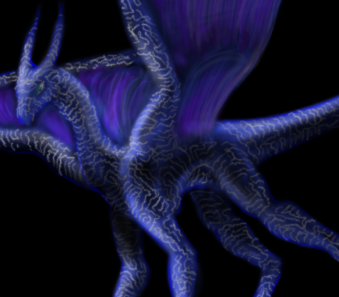
| + | **Seluurin** is a [[mythology: | ||
| + | She is very likely the mythological conception of the [[Extrinsic: | ||
| + | |||
| + | ===== Names and epithets ===== | ||
| + | Seluurin is her name in the [[geography: | ||
| + | |||
| + | Among the epithets ascribed to her are the Fateweaver, the Builder, and the Mother of Schemes. | ||
| + | |||
| + | ===== Realm ===== | ||
| + | According to legend, Seluurin' | ||
| + | |||
| + | ===== Worship ===== | ||
| + | While the worship of the Lamnar is rarely organized or regular, that of the Diarchs is nearly nonexistent. Neither Seluurin or Khezri is close enough to daily life to provide aid; and in any case, it is said that they accept no sacrifices or offerings except oneself: they wish those seeking Their favor to act and behave in particular ways in their daily life. | ||
| + | |||
| + | ===== Mythological role ===== | ||
| + | For Seluurin, the world is a framework of purpose, meaning, and context. For things to work, to get done, to progress, requires that its components have to perform certain tasks and bear certain relationships with other components, in a grand structure that encompasses everything from the tiniest of particles to whole clusters of galaxies. | ||
| + | |||
| + | To finish the puzzle, each piece must fit into those around it. To run the machine, each gear must mesh and spin with other gears. To make a civilization, | ||
| + | |||
| + | Seluurin, above all things, sees to it that the world is stable, predictable, | ||
| + | |||
| + | In all this, she is most consistently opposed by her twin sister, Khezri, with whom she vies eternally for influence in an endless game. | ||
| + | |||
| + | ===== Mythological history ===== | ||
| + | Both Diarchs play a prominent role in the [[item: | ||
| + | |||
| + | {{tag> | ||