ethnicity:hwimat
Differences
This shows you the differences between two versions of the page.
| Both sides previous revisionPrevious revisionNext revision | Previous revision | ||
| ethnicity:hwimat [2024/01/17 10:04] – removed - external edit (Unknown date) 127.0.0.1 | ethnicity:hwimat [2024/01/25 10:21] (current) – shyriath | ||
|---|---|---|---|
| Line 1: | Line 1: | ||
| + | ====== Hwimat ====== | ||
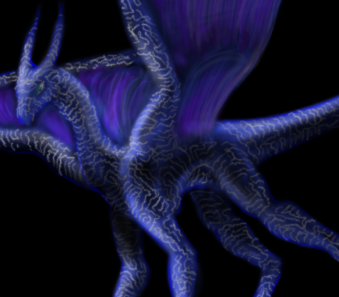
| + | The **Hwimik** ([[language: | ||
| + | |||
| + | Most Hwimik are nomadic, but migrate in seasonal patterns; during the night, when the desert is cooler and more humid, they will go out and forage broadly, while during the day, they will - whenever possible - seek shade and water around their oases, which are also where they lay eggs and rear their young. They are largely [[https:// | ||
| + | |||
| + | As with other xtauh, and their evolutionary cousins the [[takma: | ||
| + | |||
| + | In recent cycles, an entire encampment of Hwimik disappeared during their daytime stay at [[geography: | ||
| + | ===== Naming Traditions ===== | ||
| + | ==== Feminine names ==== | ||
| + | Female names tend to be nouns, intended to compare the bearer with some substance, object, or organism considered to have characteristics desirable for a female, such as stability, fertility, or martial prowess. Examples: //Iktim// " | ||
| + | |||
| + | ==== Masculine names ==== | ||
| + | The " | ||
| + | |||
| + | Perhaps unsurprisingly, | ||
| + | |||
| + | ===== Culture ===== | ||
| + | ==== Major language groups and dialects ==== | ||
| + | The language of the Hwimik is [[language: | ||
| + | |||
| + | Hwimpilh is relatively homogenous; although mild variations exist at each oasis, grouping loosely into northern and southern dialects, the dispersal and mobility of most of the tribe' | ||
| + | |||
| + | ==== Common dress code ==== | ||
| + | Like most xtauh, Hwimik have no nudity taboo; and, indeed, a relative dearth of materials makes the wearing of clothing for any but utilitarian purposes somewhat wasteful. | ||
| + | |||
| + | ===== Ideals ===== | ||
| + | ==== Gender Ideals ==== | ||
| + | The Hwimik tend to link femininity with the earth: like rock, a female should be solid and strong, unable to be easily moved; like soil, she pushes forth new life, or reclaims it from those who should not have it. | ||
| + | |||
| + | Females are highly conscious of their status, families, and possessions in relation to those of other females, though as a largely nomadic people " | ||
| + | |||
| + | Female xtauh are, on average, larger and stronger than males. While their lack of metallurgical techniques limits the choice of weapons available to the Hwimik and those wielded by each gender overlap substantially, | ||
| + | |||
| + | Male Hwimik are held to rather looser standards of behavior than are females, and what those standards are depends on who is judging. Females, generally, prefer males that are respectful without being subservient, | ||
| + | |||
| + | Being rarely encountered within a fairly sparse population, the Hwimik have a limited amount of cultural space for transgender individuals and none at all for non-binary. While fairly egalitarian in their divisions of labor, males and females are expected to behave very differently within a societal context. One born biologically male, in particular, has very few sanctioned avenues for behaving in a manner expected from females, much less identifying as one; the female pecking order would react with ire at the intrusion, while male social circles would consider it an act of self-exclusion. A biological female, by contrast, may through public self-identification as a male be generally accepted as one, though this must be accompanied by behavior; such a male will lose all female status and no marriage to another male will be recognized. While around females, his facial markings must also be hidden, lest they provoke aggressive displays; often a light-colored cosmetic is used for this purpose. | ||
| + | |||
| + | ==== Courtship Ideals ==== | ||
| + | Like most xtauh cultures, Hwimat courtship centers around the giving of gifts by a male suitor to the female. Their nomadic lifestyle puts constraints on the physical size and weight of gifts. While food and drink, being consumables, | ||
| + | |||
| + | Rejection of the gift is rare, and indicates either a very poor choice of gift or a complete and utter dislike for the suitor. However, more often, the female will accept it without reference to how interested she is in the suitor; it is understood among the Hwimik that acceptance of the gift is not acceptance of the giver. It is considered good manners among the Hwimik, therefore, for the female to tell her suitor what kind of impression he is having on her and whether he has a chance with her. For a female to give outright praise in this context implies that she considers her suitor a rare find indeed; a more common, and more tempered, positive response involves humorously backhanded praise and suggestions for improvement. Genuine displeasure tends to be expressed more tersely. | ||
| + | |||
| + | While a female, if particularly interested in a specific male, may attempt to subtly encourage him, overtly pursuing him will lower her social standing; by convention the formal opening of the courtship is initiated by the male. Courtship tends not to be leisurely, as the group with which each participant is traveling may part ways shortly and not meet again for some time thereafter; during each crossing of paths, therefore, the male will engage in a flurry of courtship-related activity while he has the chance to be close to the female. Some courtships are concluded before parting, but it is quite common for them to be suspended and then resumed at the next meeting; the female will often use this as time to think over her suitor. | ||
| + | |||
| + | A courtship is successfully concluded when the female invites the male to join her and travel with her. If he agrees, then, though a formal ceremony is rarely involved, they are essentially married. | ||
| + | |||
| + | ==== Relationship Ideals ==== | ||
| + | Like all xtauh, the Hwimik tend toward [[https:// | ||
| + | |||
| + | Hwimat marriage, therefore, as the endpoint of the courtship process, has only an indirect relationship to fidelity, as it is mostly a commitment to mutual support, living arrangements, | ||
| + | |||
| + | Hwimat families are female-dominated, | ||
| + | |||
| + | While some xtauh females will take different husbands for different roles in their lives, the Hwimik do not have the luxury of indulging in this practice; their lifestyle obliges them to be generalists, | ||
| + | |||
| + | {{tag> | ||